About the Blog — From the Flow
11:11
This blog is a living extension of Agápē de Via Aqua™ — a journal of New York’s water, food, and people. Here, every story begins with a place — a market in Chinatown, a dim-sum table at Jing Fong, a street corner where steam rises from a bowl of soup. I write about the city through taste, faith, and everyday grace — how food connects migration, memory, and love. From the aquariums to the markets, from the kitchens to the home table, everything flows like water.These blogs are my way of capturing that flow — turning small moments into stories of connection, and reminding us that New York is not just a city of speed, but a city of shared meals and quiet kindness.
The Grown Shells
11:11
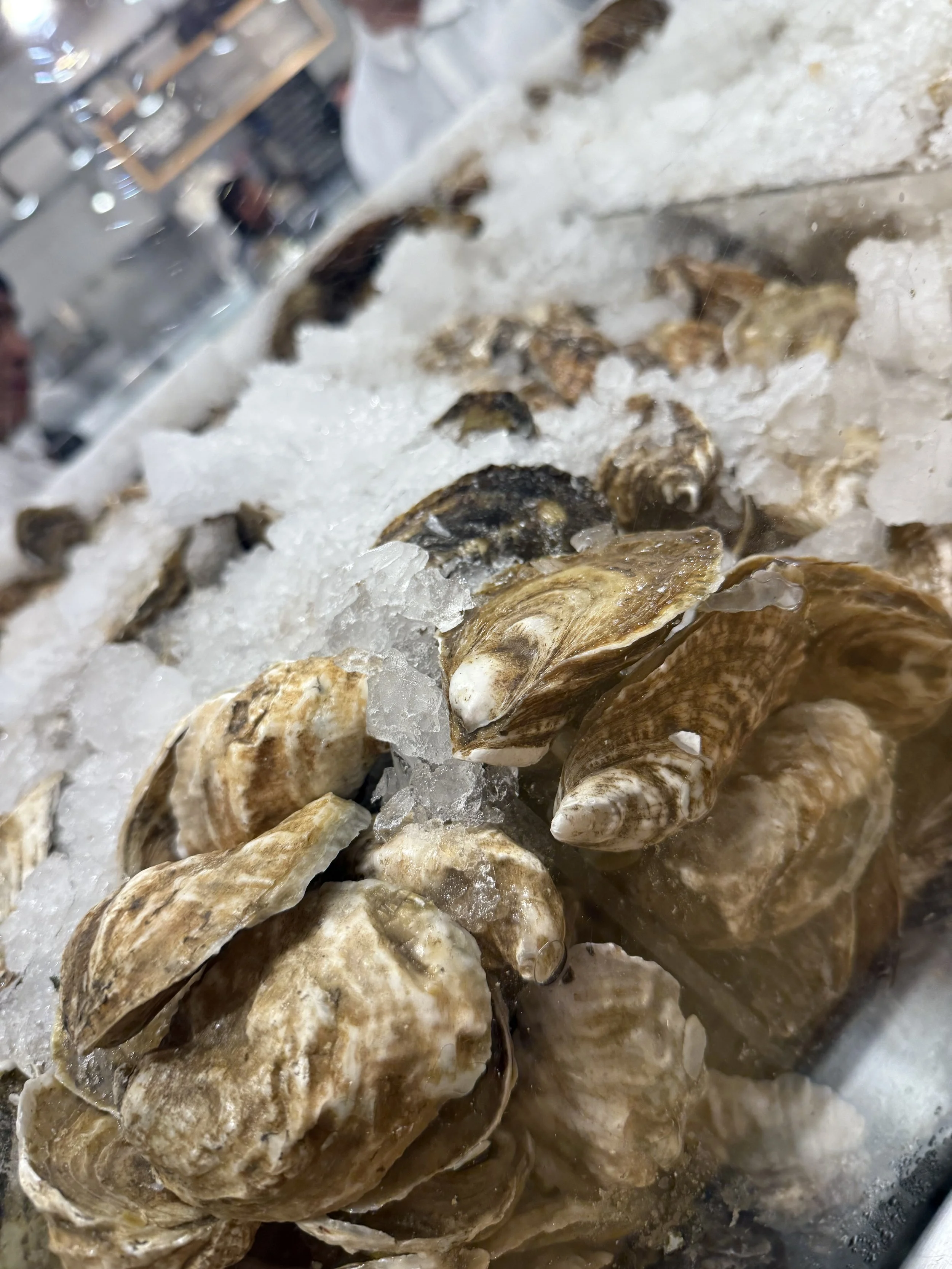
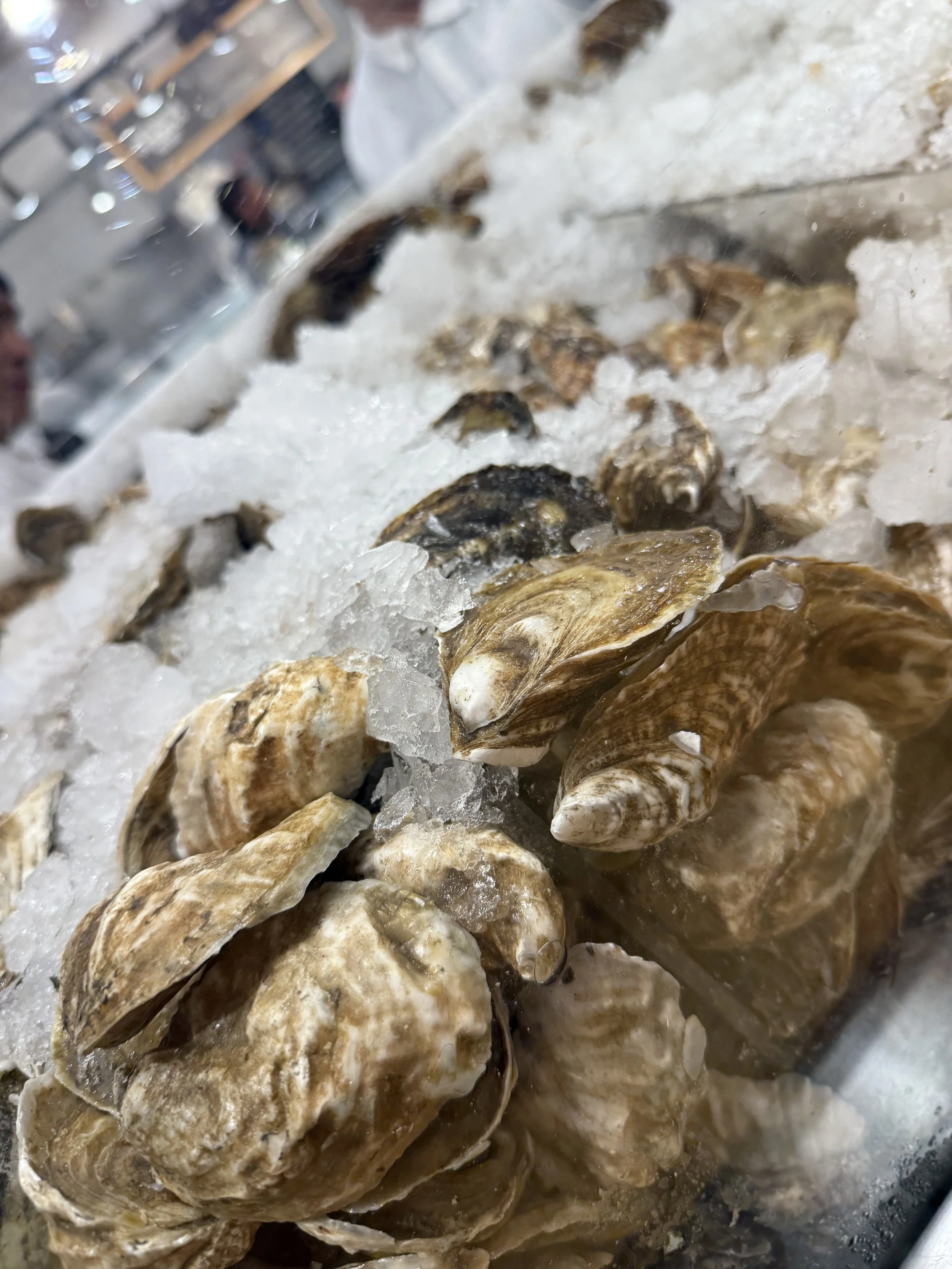
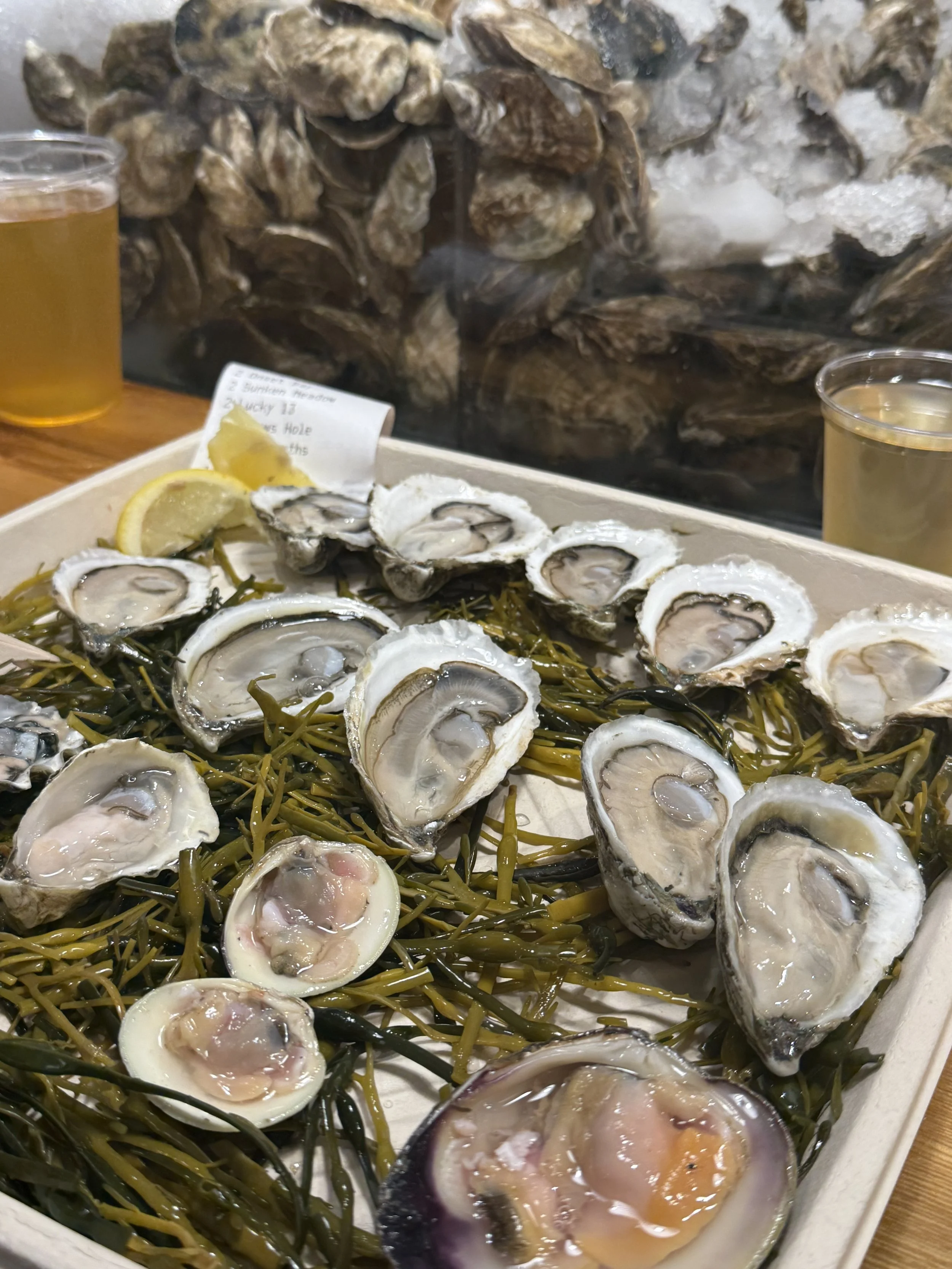
Now we arrive at Chinatown. The small shells I once saw in Petco have grown up—they’vebecome oysters resting on a bed of crushed ice. Under the white light of the market, their rough shells glisten like stones from another world. Behind the counter, workers in white coats move swiftly, opening one shell after another. The sound of the knife cutting through the shell is sharp but rhythmic, like a ritual of daily life.I suddenly realized that the life cycle of these creatures is both natural and constructed. From the aquarium to the market, from being admired to being eaten, every step is arranged by human hands.
Next Chapter
11:11
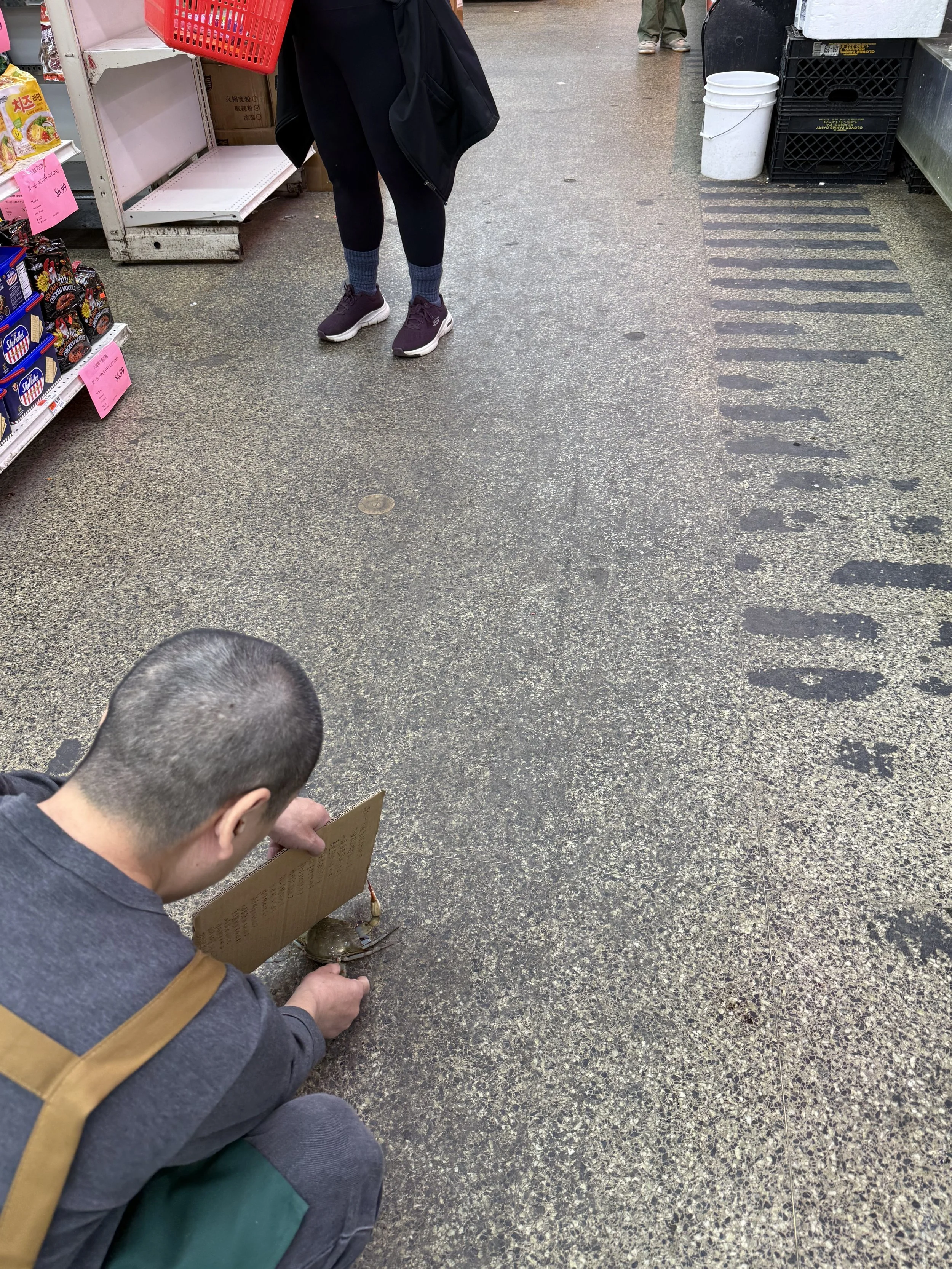
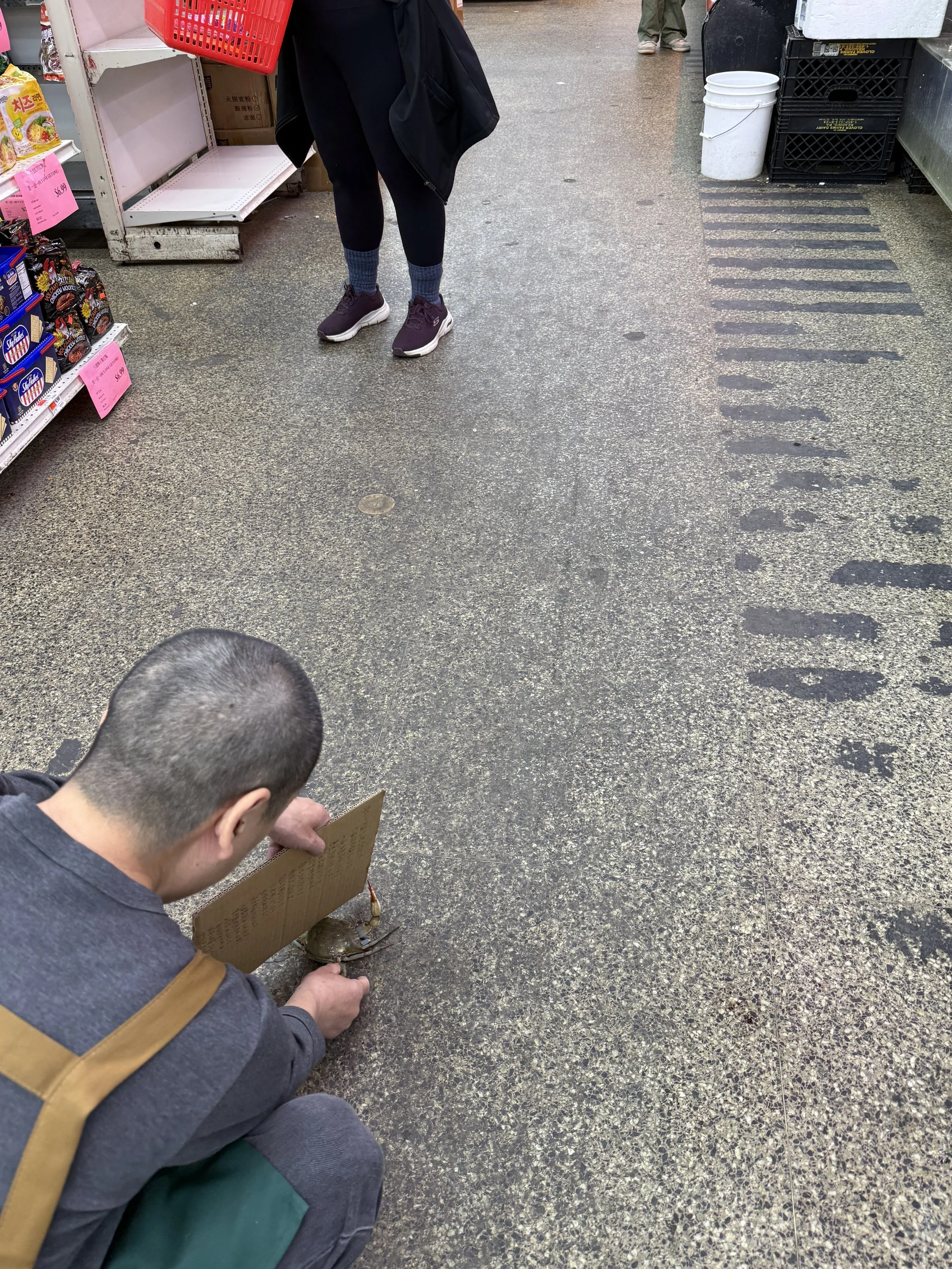
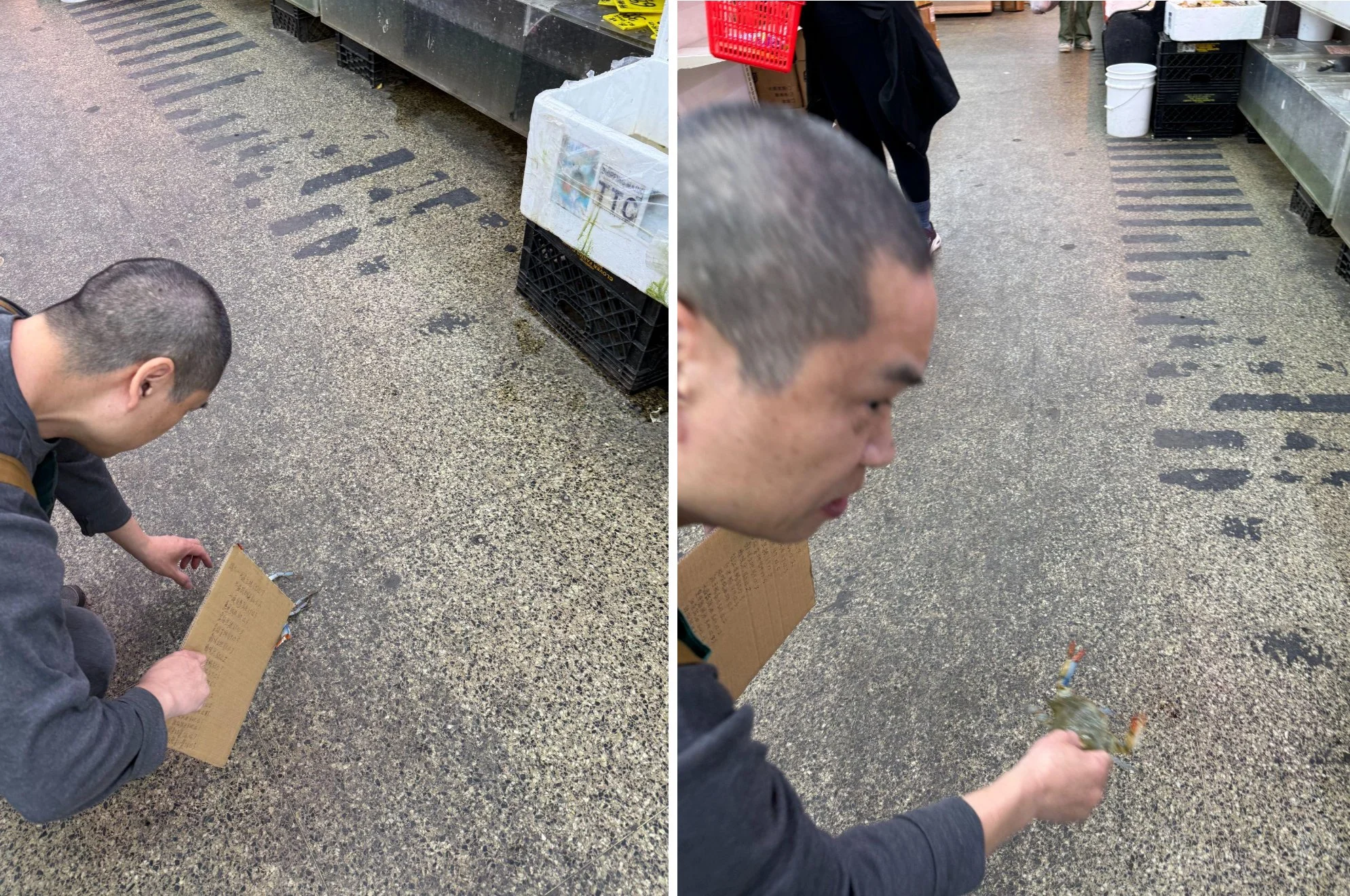
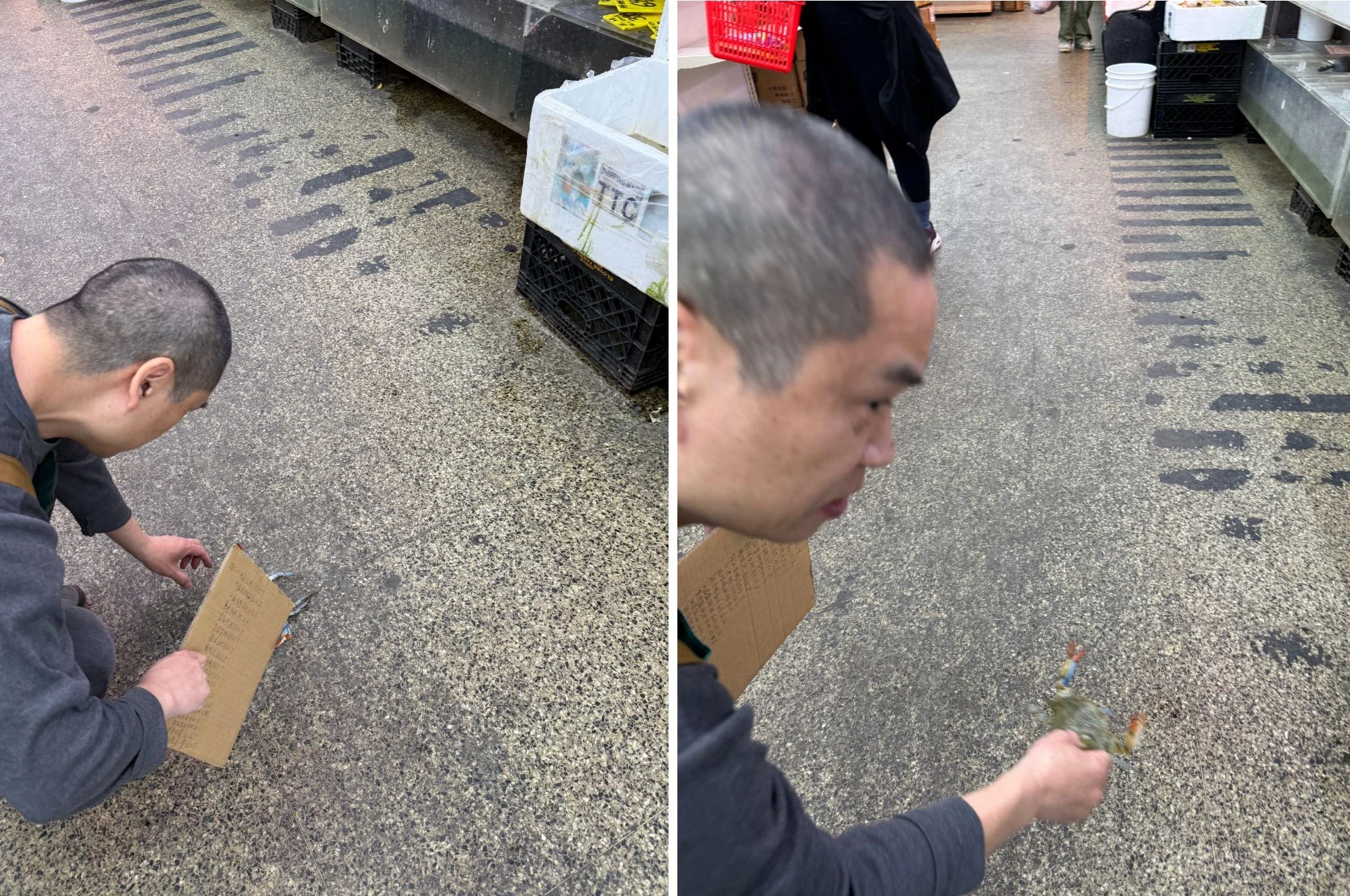
Then, a man kneels down with a piece of cardboard and gently traps it. The escape is over before it even began. Maybe the crab’s short escape mirrors our own illusions of freedom. We run, we resist, we dream of open water—until a hand or a system quietly brings us back. Humor makes it bearable; irony makes it true.
Harvest
11:11
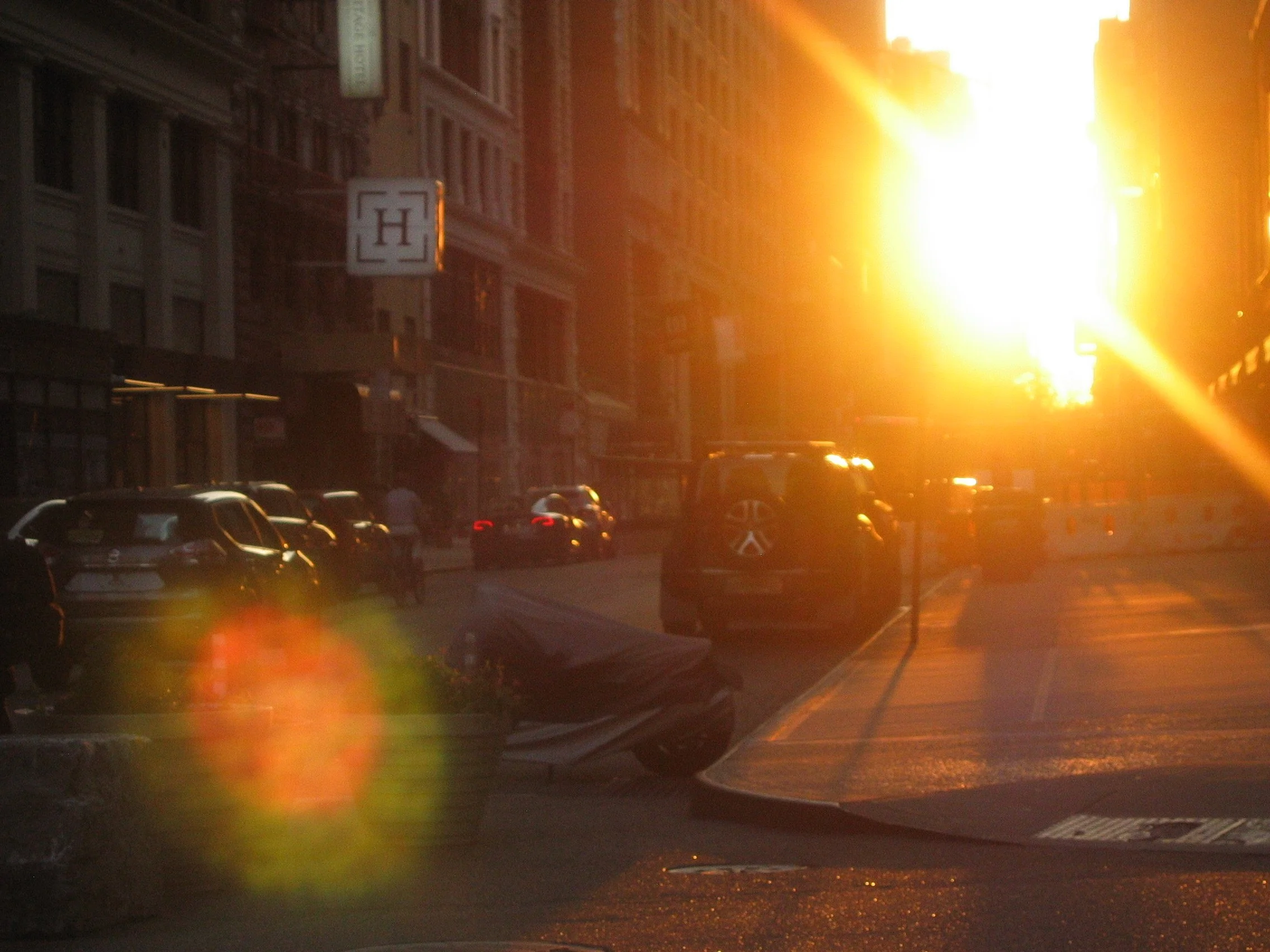
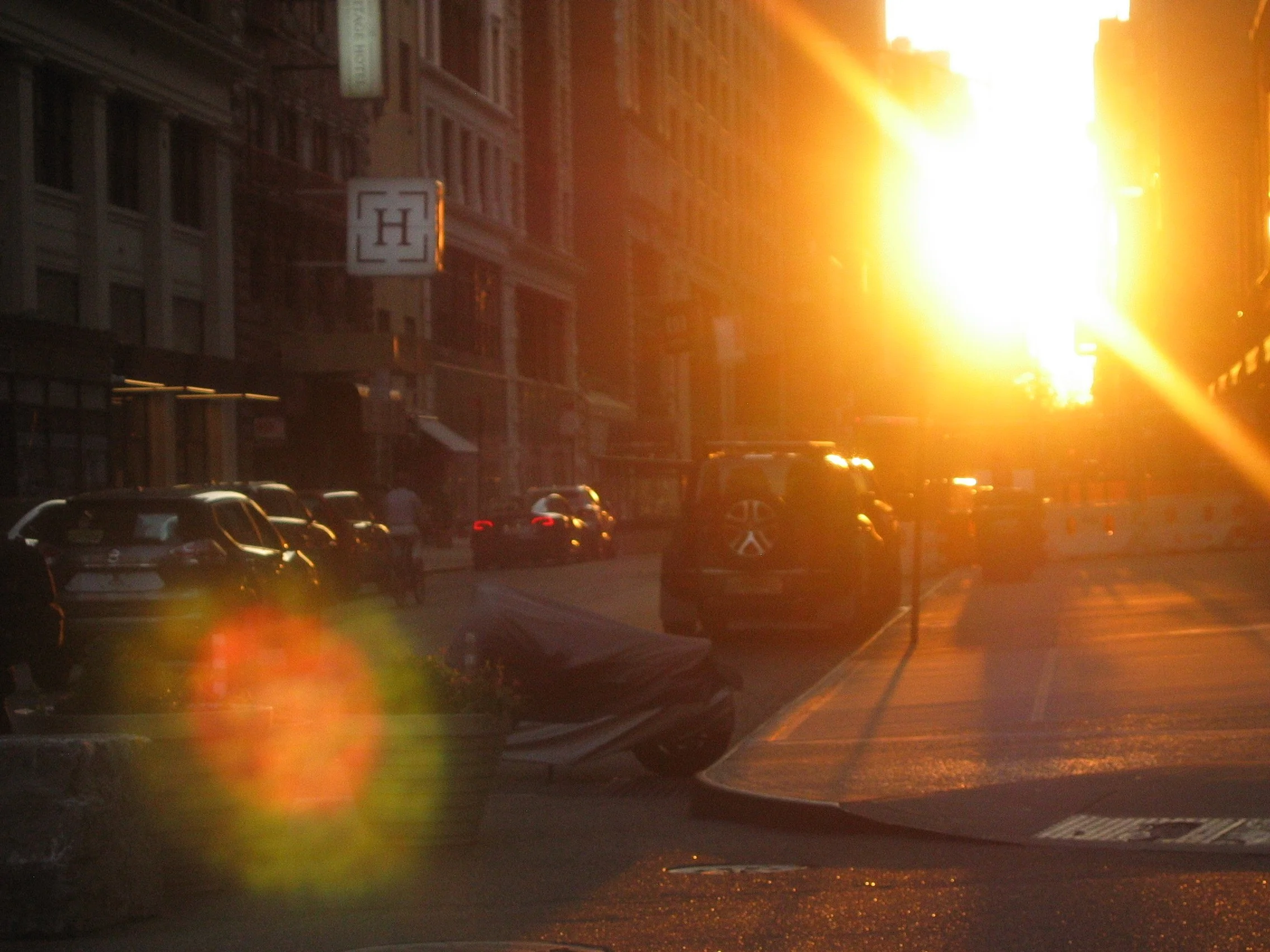
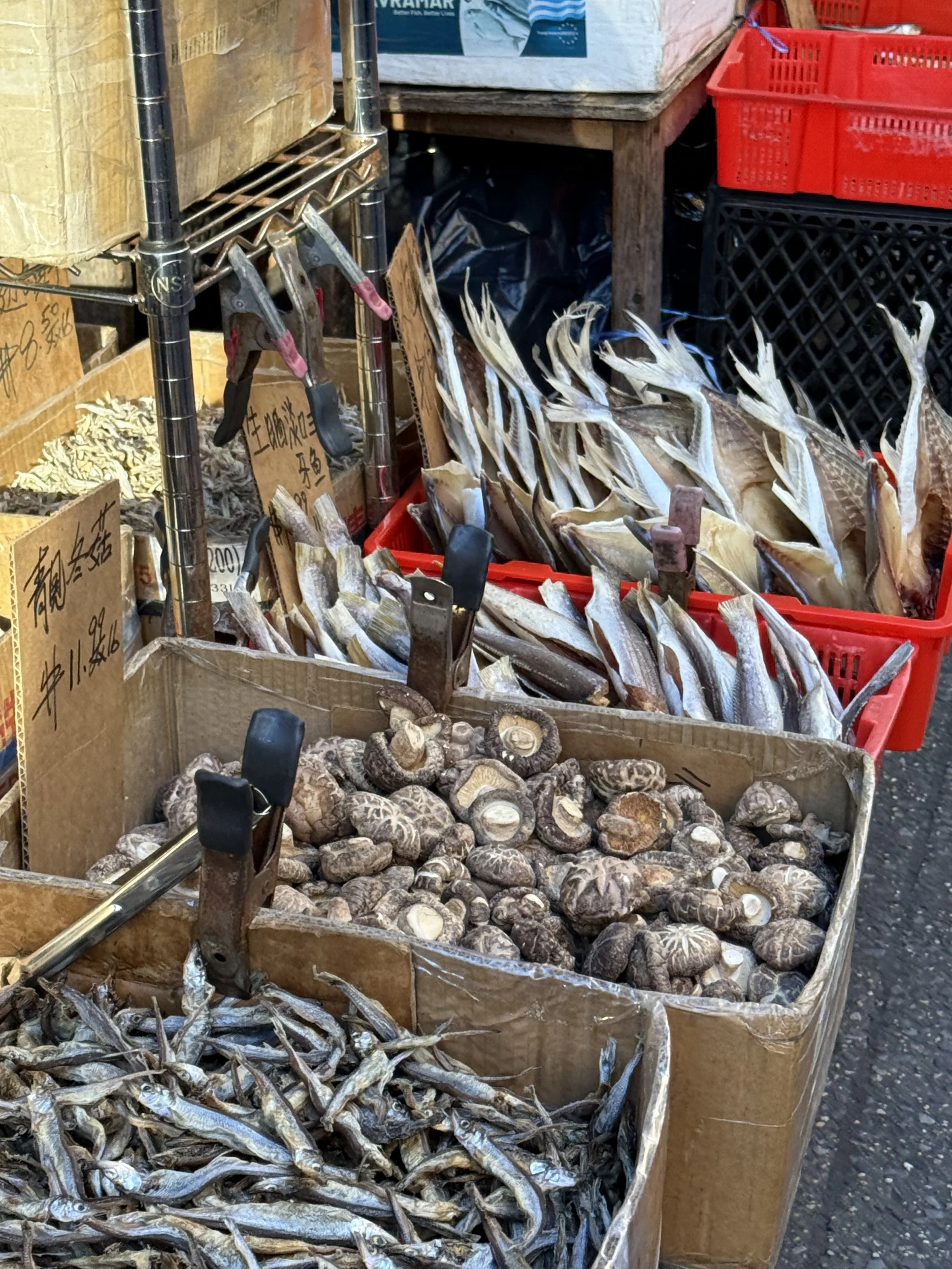
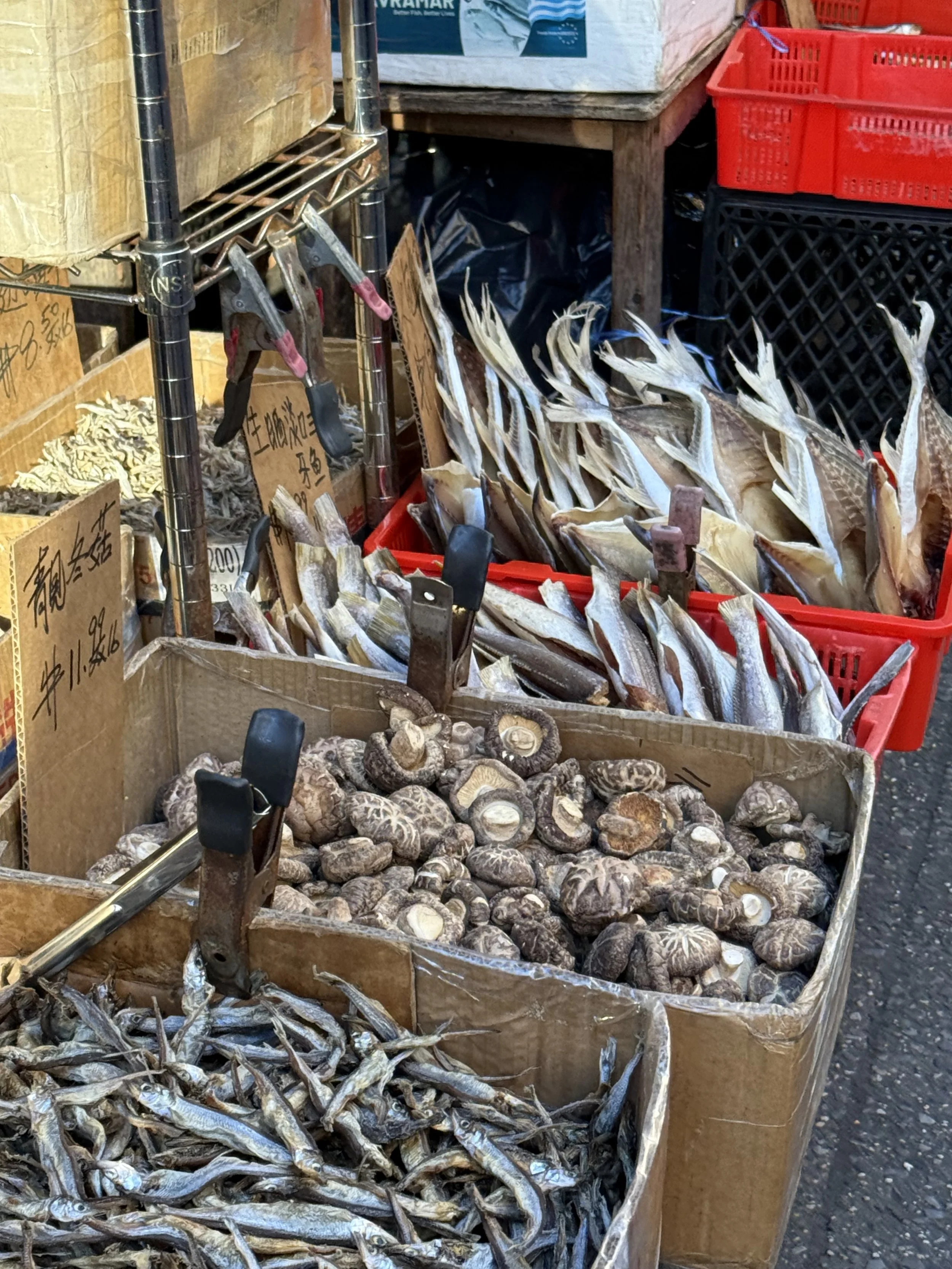
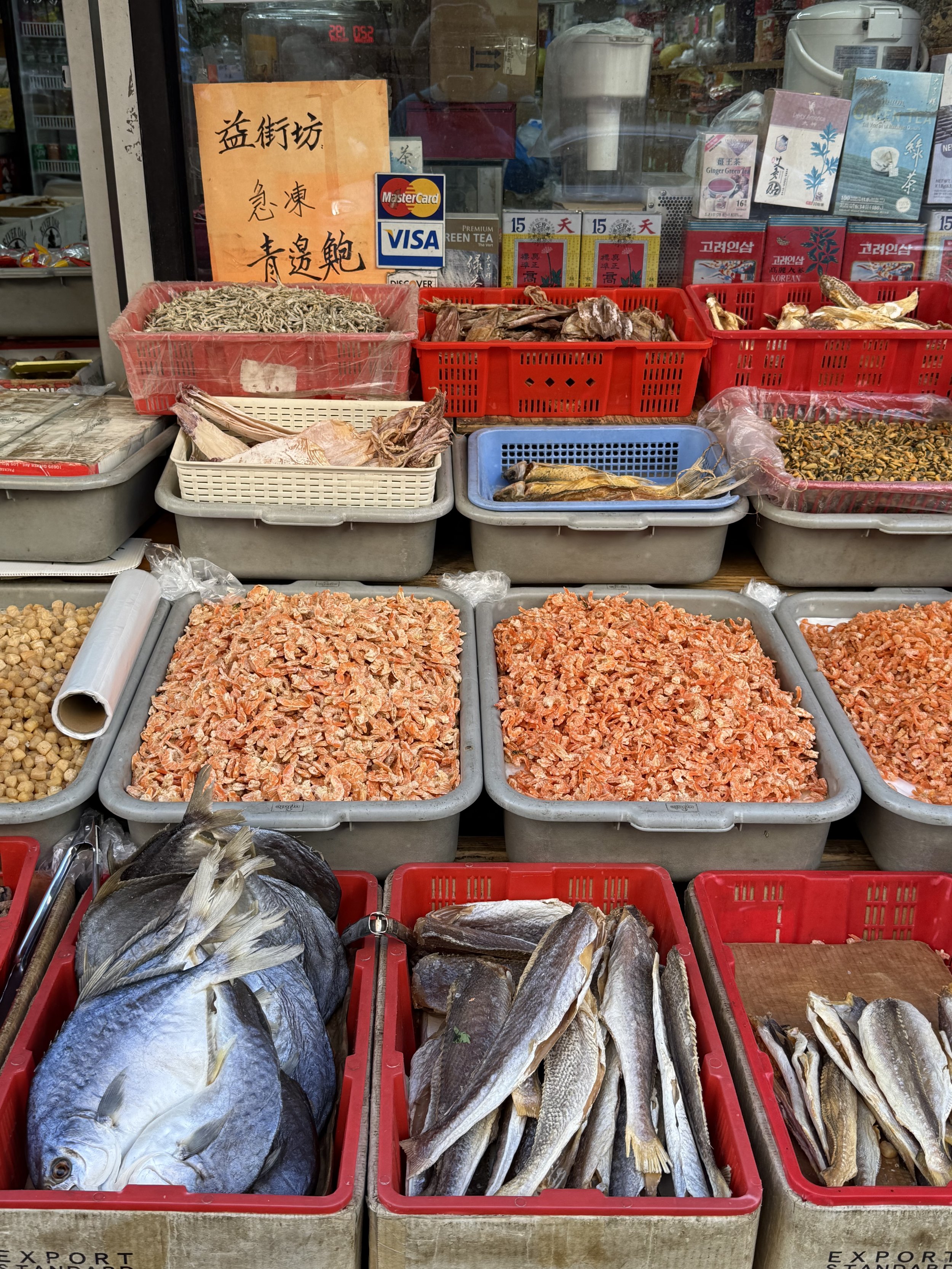
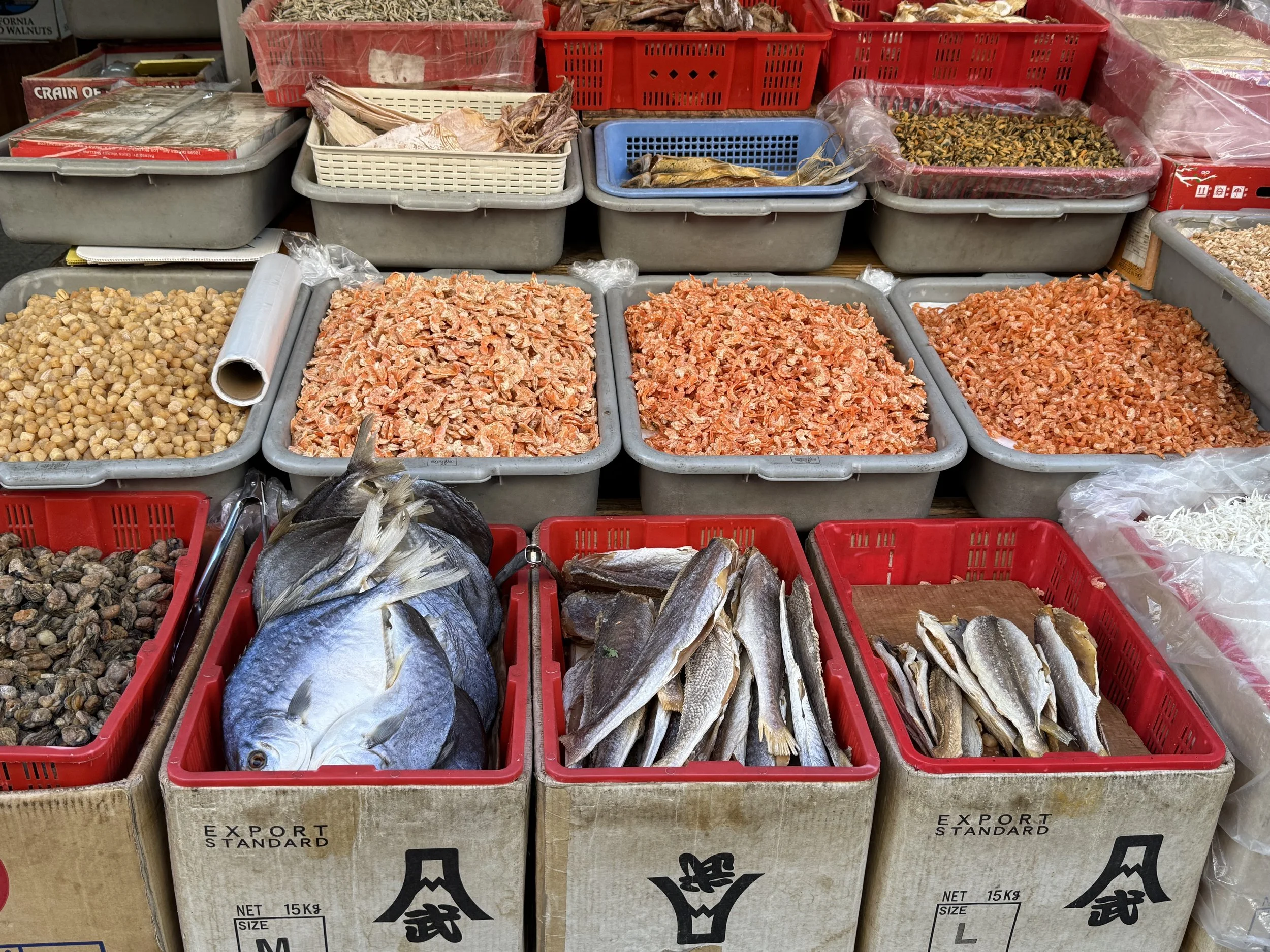
At the corner of Chinatown, the journey ends in sunlight. Boxes of dried fish, mushrooms, and herbs fill the air with a warm, earthy scent. Life has changed shape again—no longer swimming, crawling, or breathing, but still here, still serving a purpose. The street feels alive in a different way, full of color and quiet abundance
79 Elizabeth St,New York,NY 10013
11:11
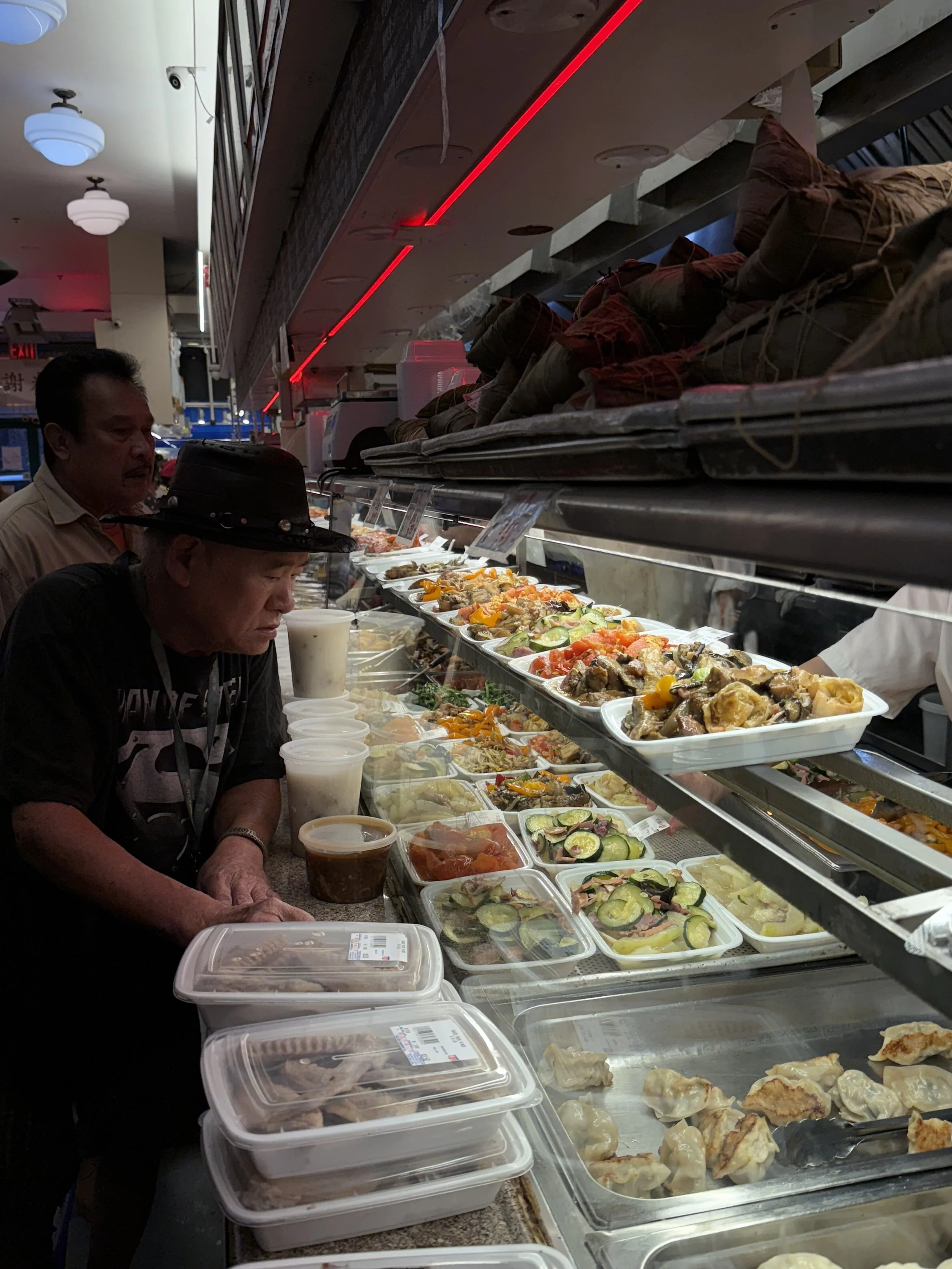
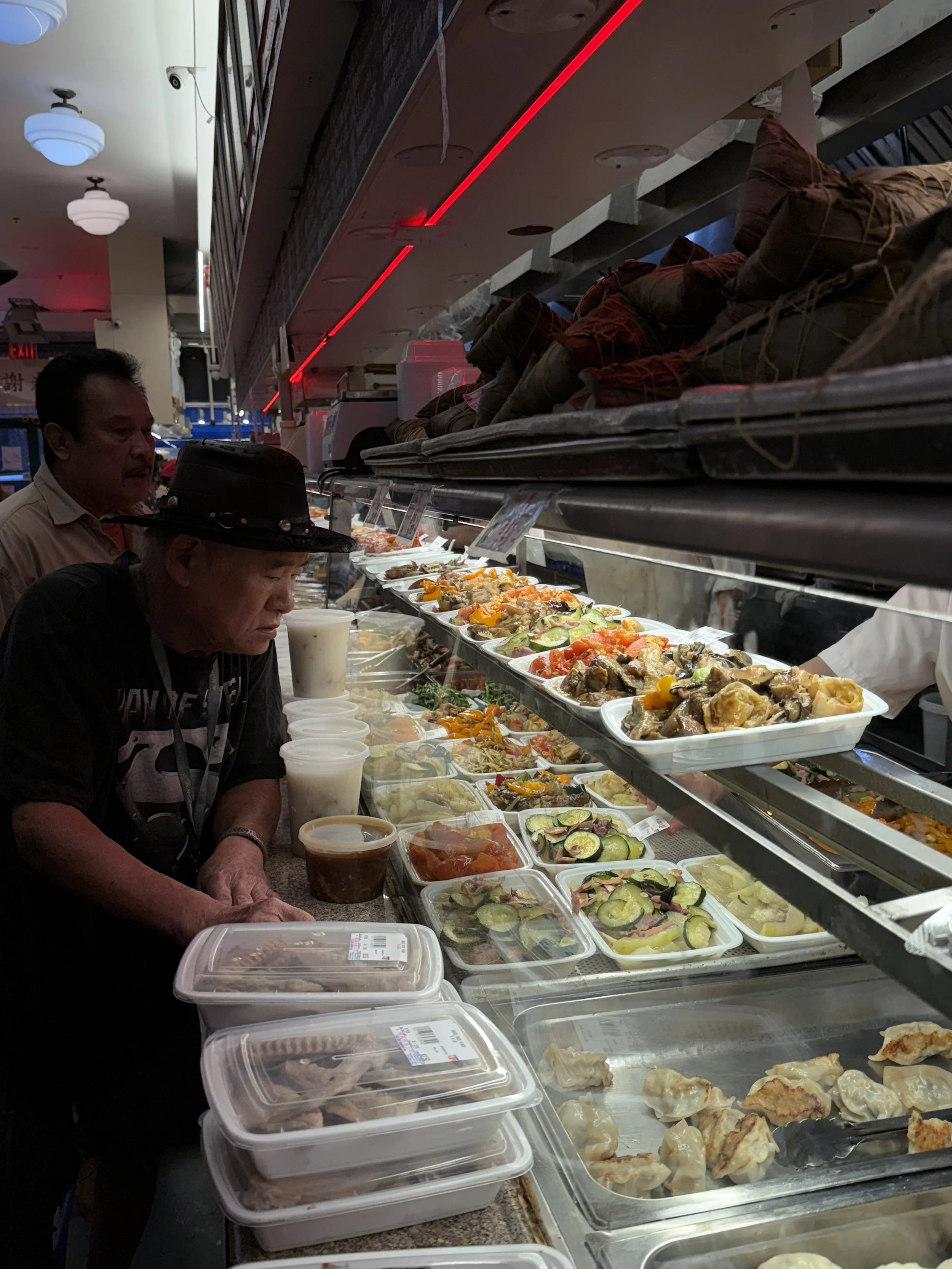
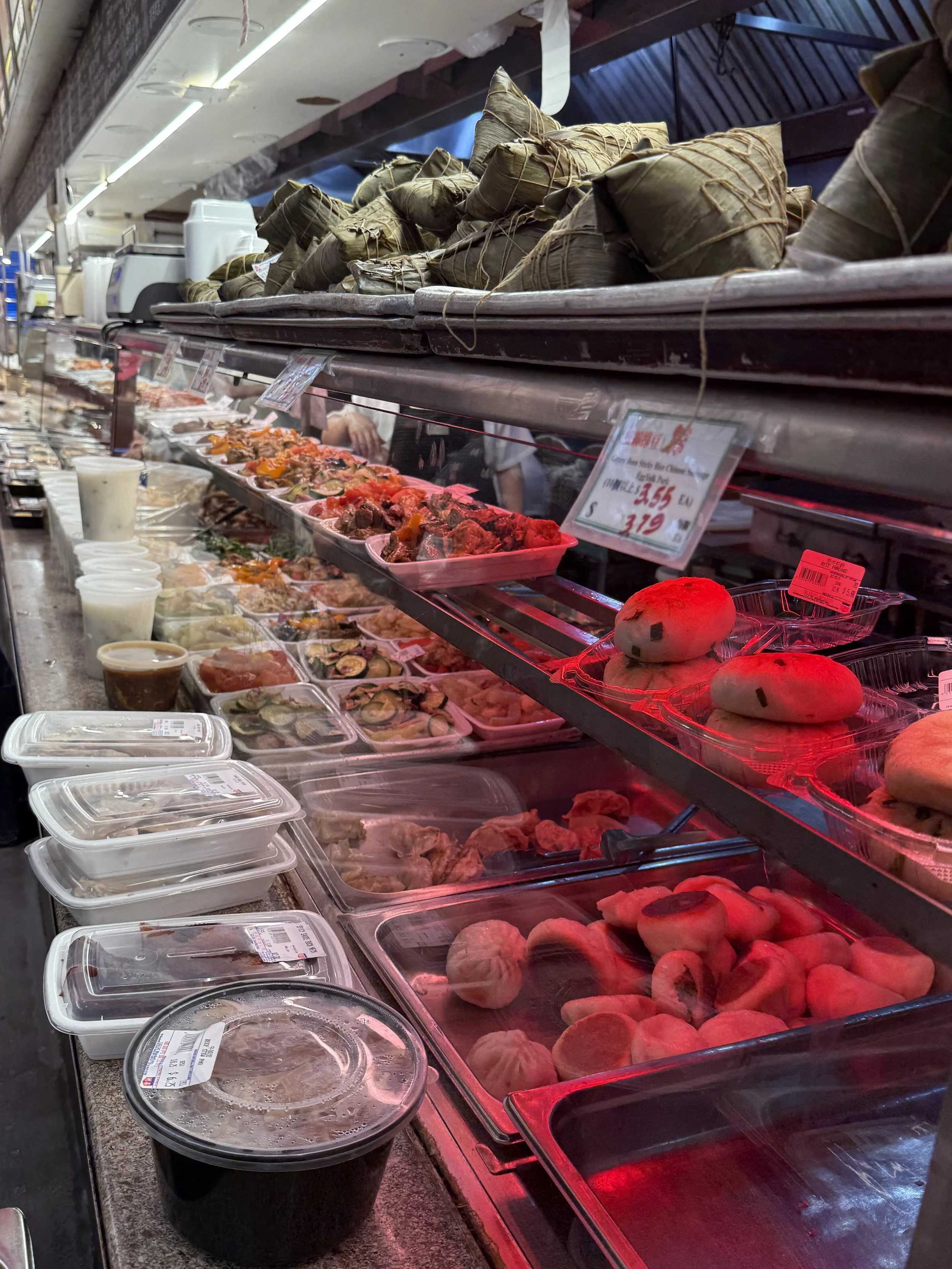
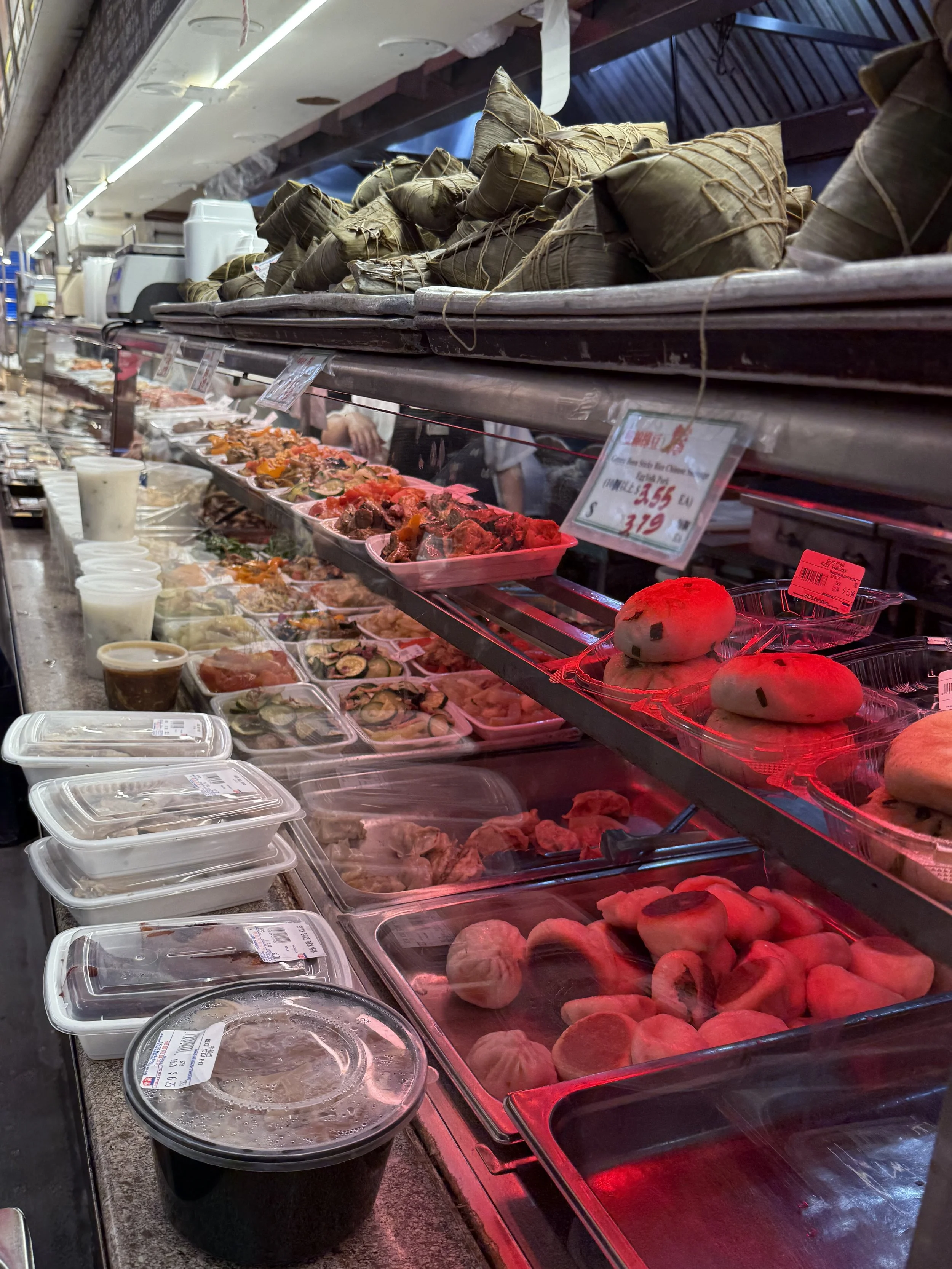
This is the food market on Elizabeth Street. People are picking what to eat for dinner—dumplings, zongzi, stir-fried dishes, all kinds of traditional Chinese food. I watched how everyone’s face looked relaxed and happy, how their hands naturally reached for something familiar. the journey from Petco’s glass tanks to Chinatown’s seafood markets, from ice trucks to dry stalls—everything finally returns here, in warmth.
The animals I saw before have turned into dishes, and somehow, it doesn’t feel cruel. It feels... human. Because food has always been part of our way to remember, to connect, and to continue. Maybe this is how life finds peace—not in the ocean or the tank, but in a shared meal.
"To Share"
11:11
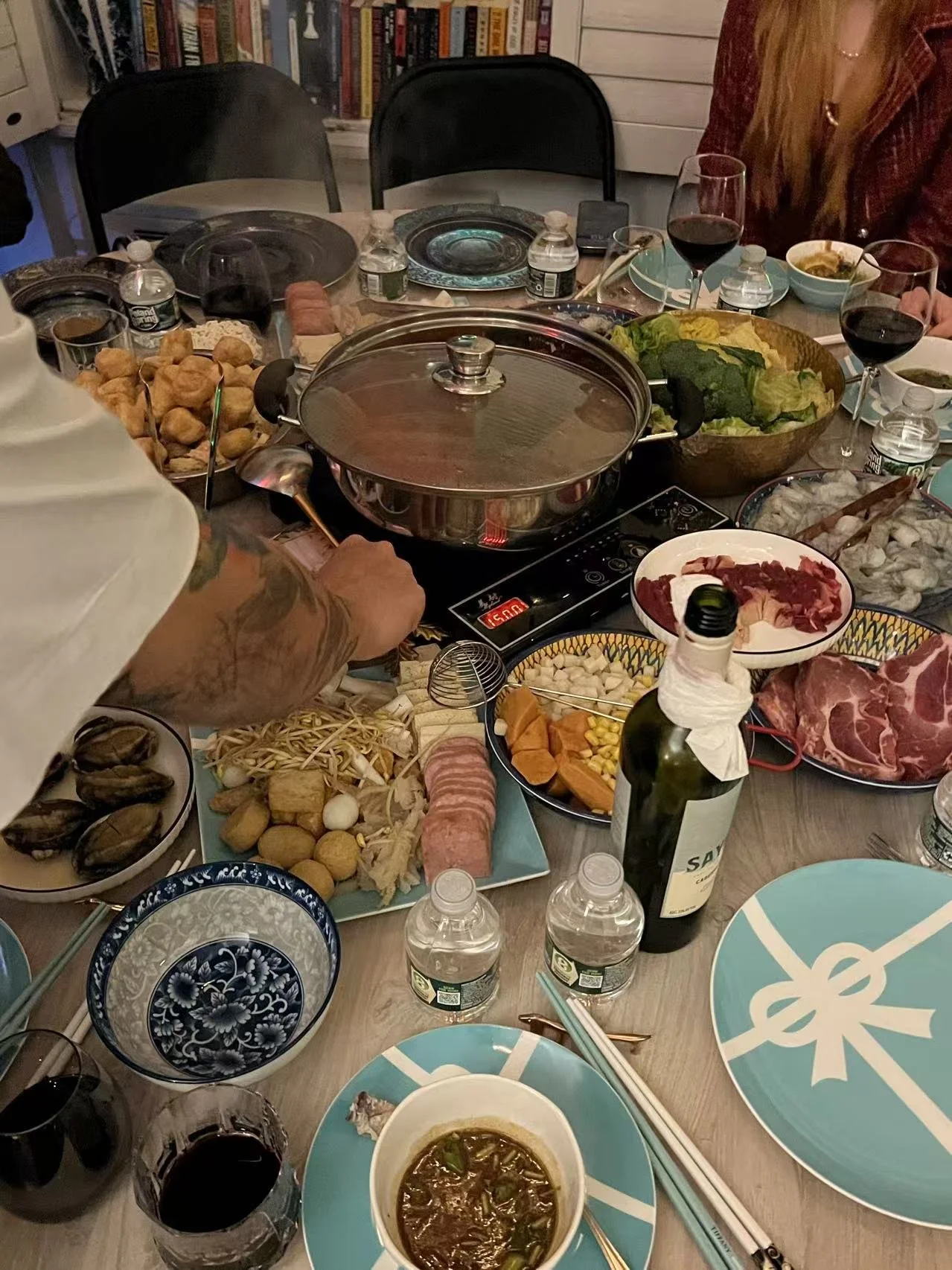
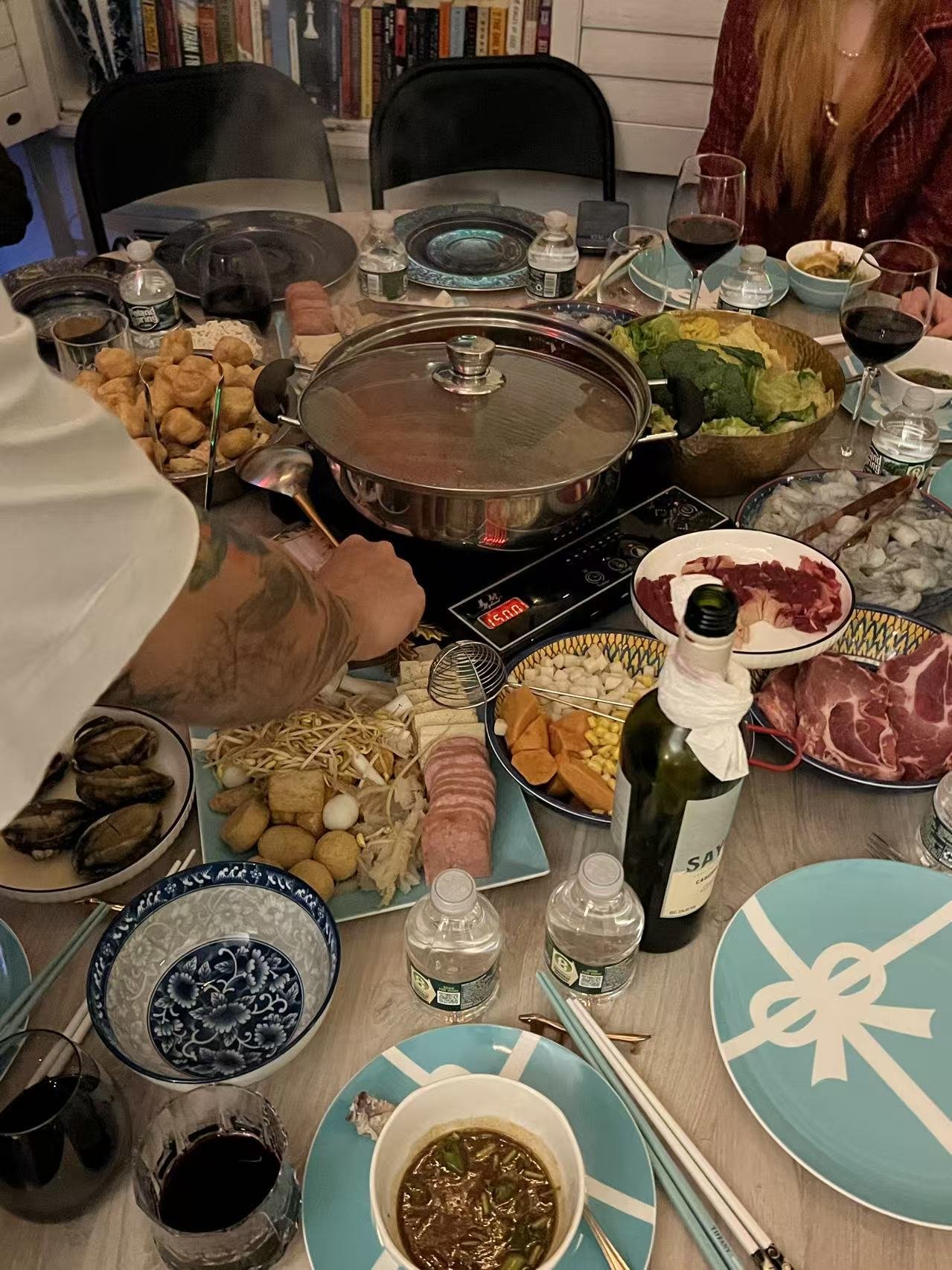
These dishes are all made by hand at home. On special days, my friends and I gather to cook and share—shrimp, crabs, roasted duck, steamed fish, vegetables, fruits, and always hotpot waiting at the center of the table. No matter if it’s a Western holiday or a Chinese festival, this gathering has become tradition. Cooking together, eating together—it feels like time slows down. Every ingredient carries a story; every bite connects us back to something real. Maybe this is what celebration truly means: not luxury, not excess, but sharing what we’ve made with the people who matter.
Yuen Yeung – The Taste of Two Worlds
11:11
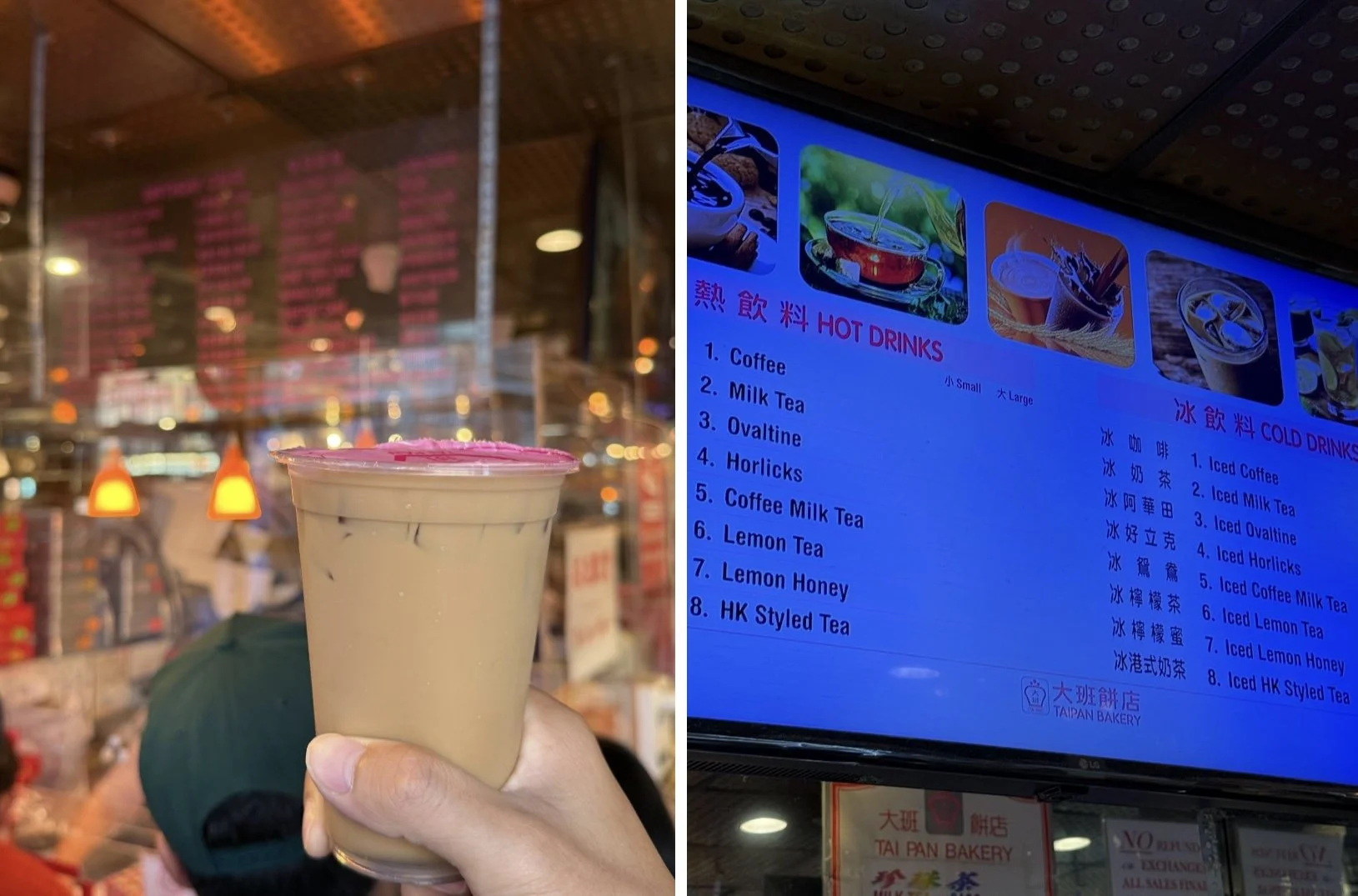
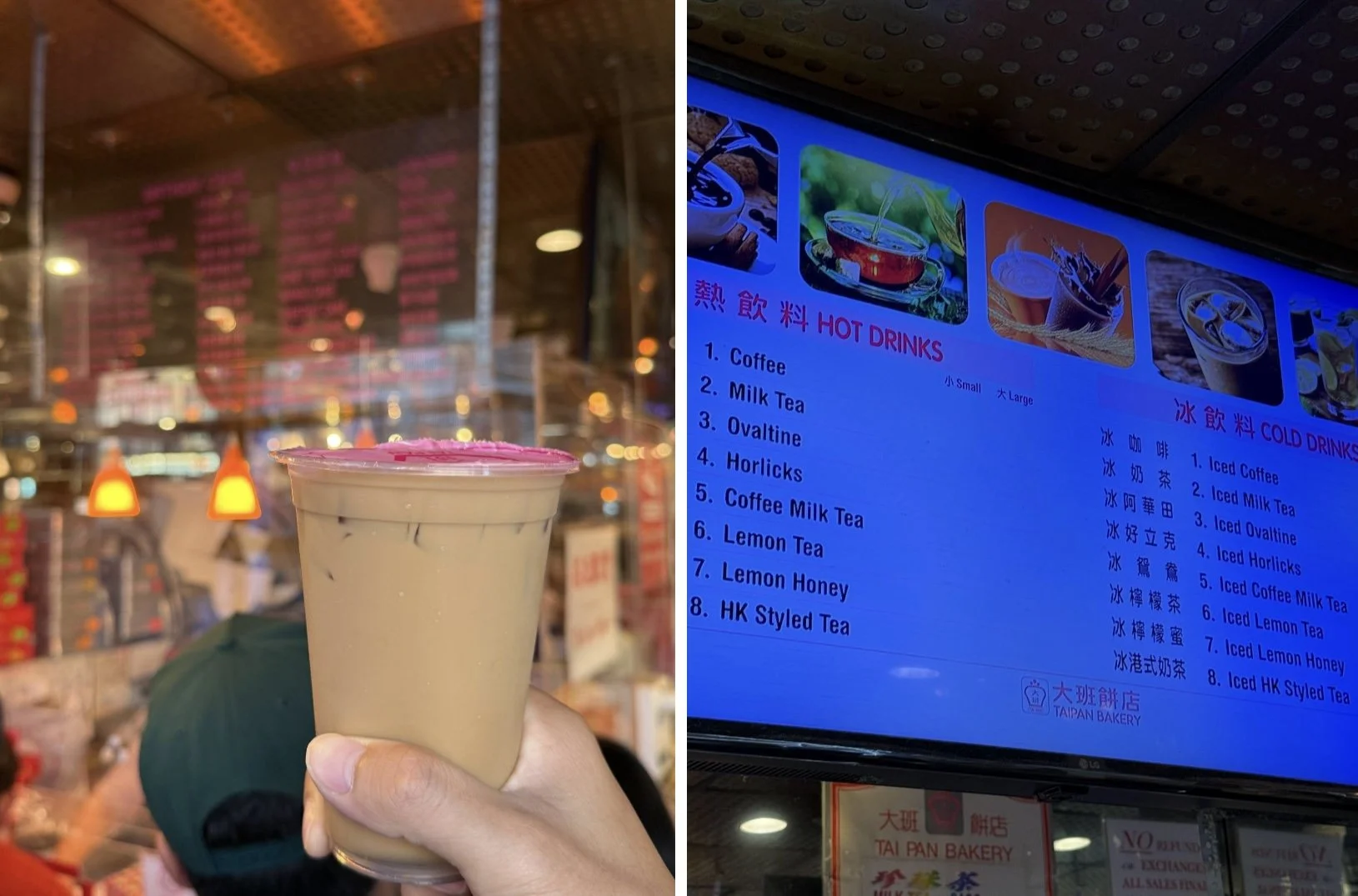
This drink is not just milk tea, and not just coffee.It’s called Yuen Yeung—a mix of both, born in Hong Kong and now part of New York’s Chinatown. It’s an unexpected balance, bitter and sweet, bold and soft at the same time. Over time, it stopped feeling like a mix and started feeling like its own flavor—a habit turned into a comfort, a comfort turned into culture.I bought it from Tai Pan Bakery, a small Chinese bakery that smells like fresh bread and coffee. Standing there, cup in hand, I realized this drink was more than taste. It was a symbol of how cultures meet and quietly become something new— something that belongs to both worlds, and yet to neither.
A Chinatown Photo Journey
11:11
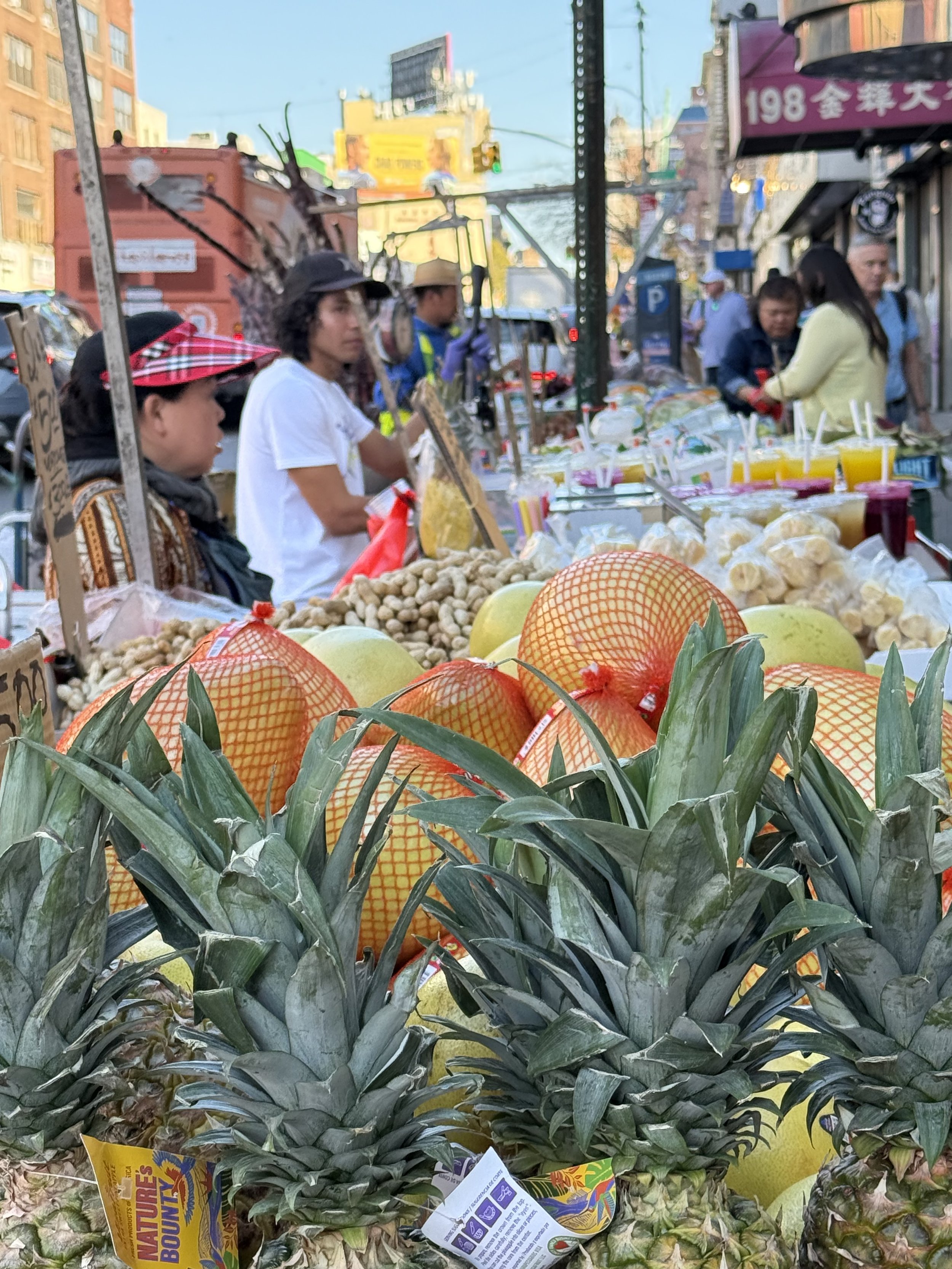
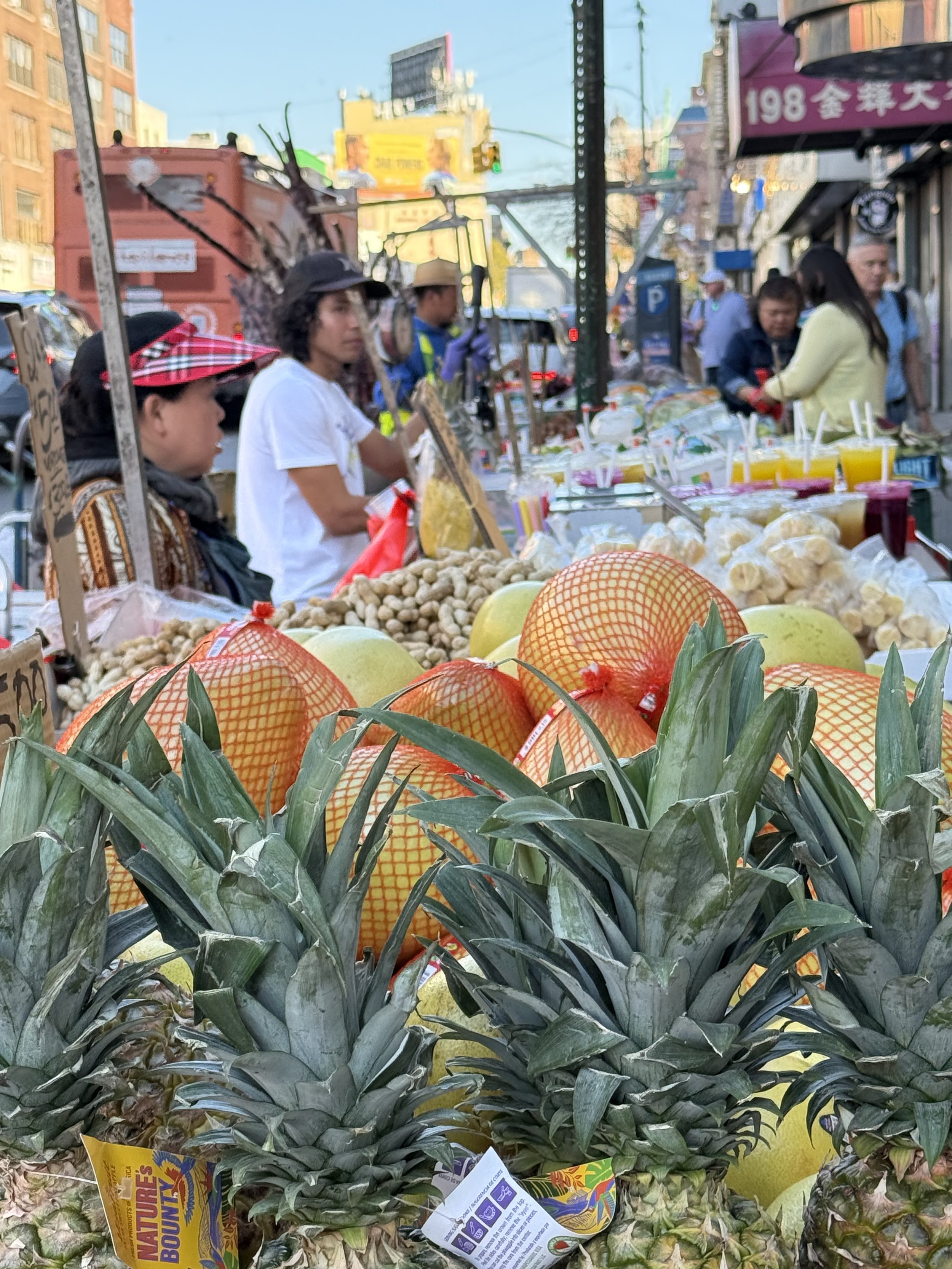
I was walking through Chinatown one afternoon, just taking pictures of what caught myeye—seafood stalls, steam, people eating, people working. And then I realized: everything here moves like water. The food, the sounds, the people — they’re all part of the same flow. It’s calm, it’s alive, and somehow, it brings everyone to the same table. Water isn’t just what cooks the food or washes the dishes. It’s what connects everything —the markets, the kitchens, the families, the city itself. It’s the quiet rhythm behind every story,moving through life, through us, all the time.
The Hand That Chooses
11:11
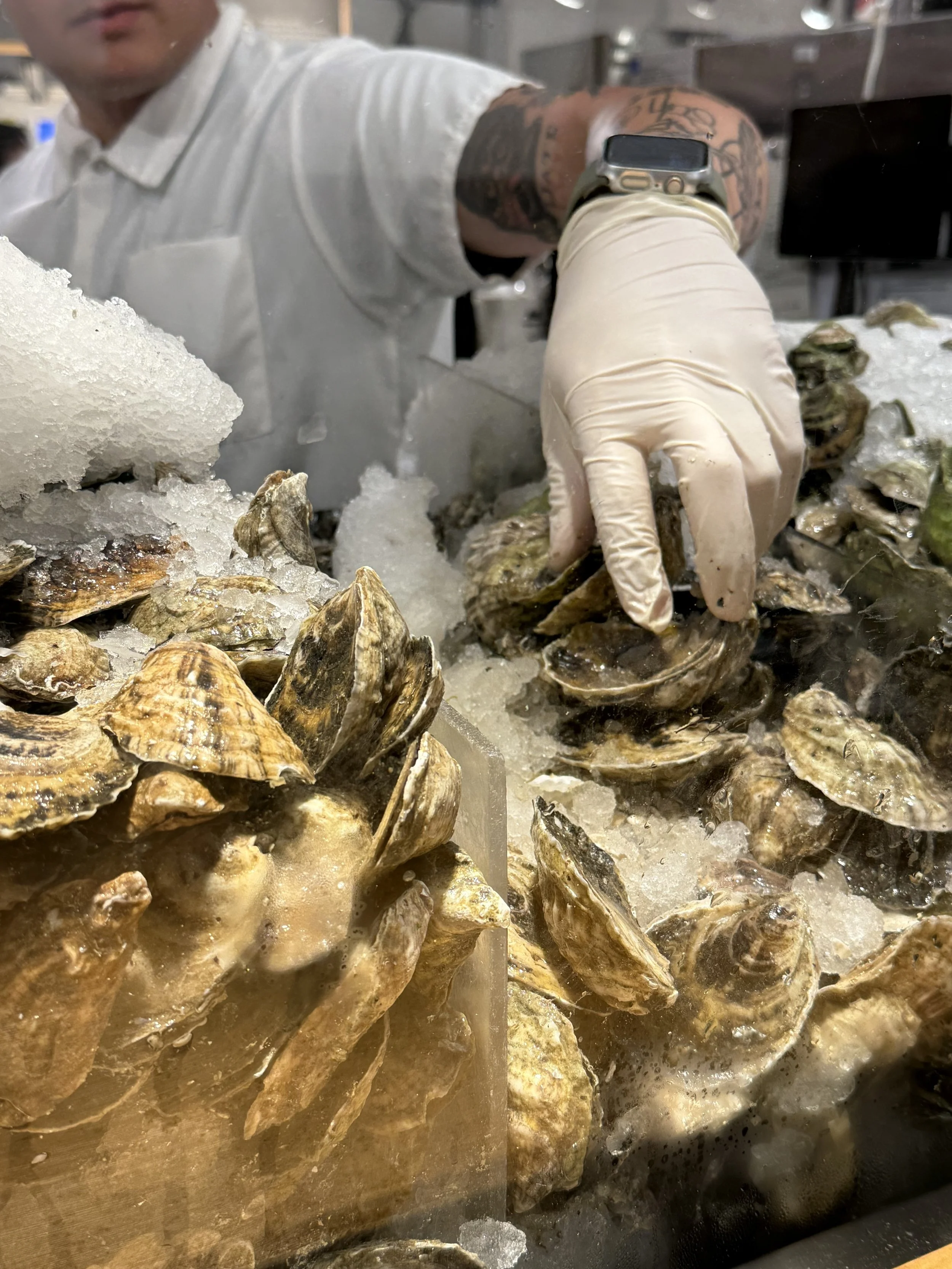
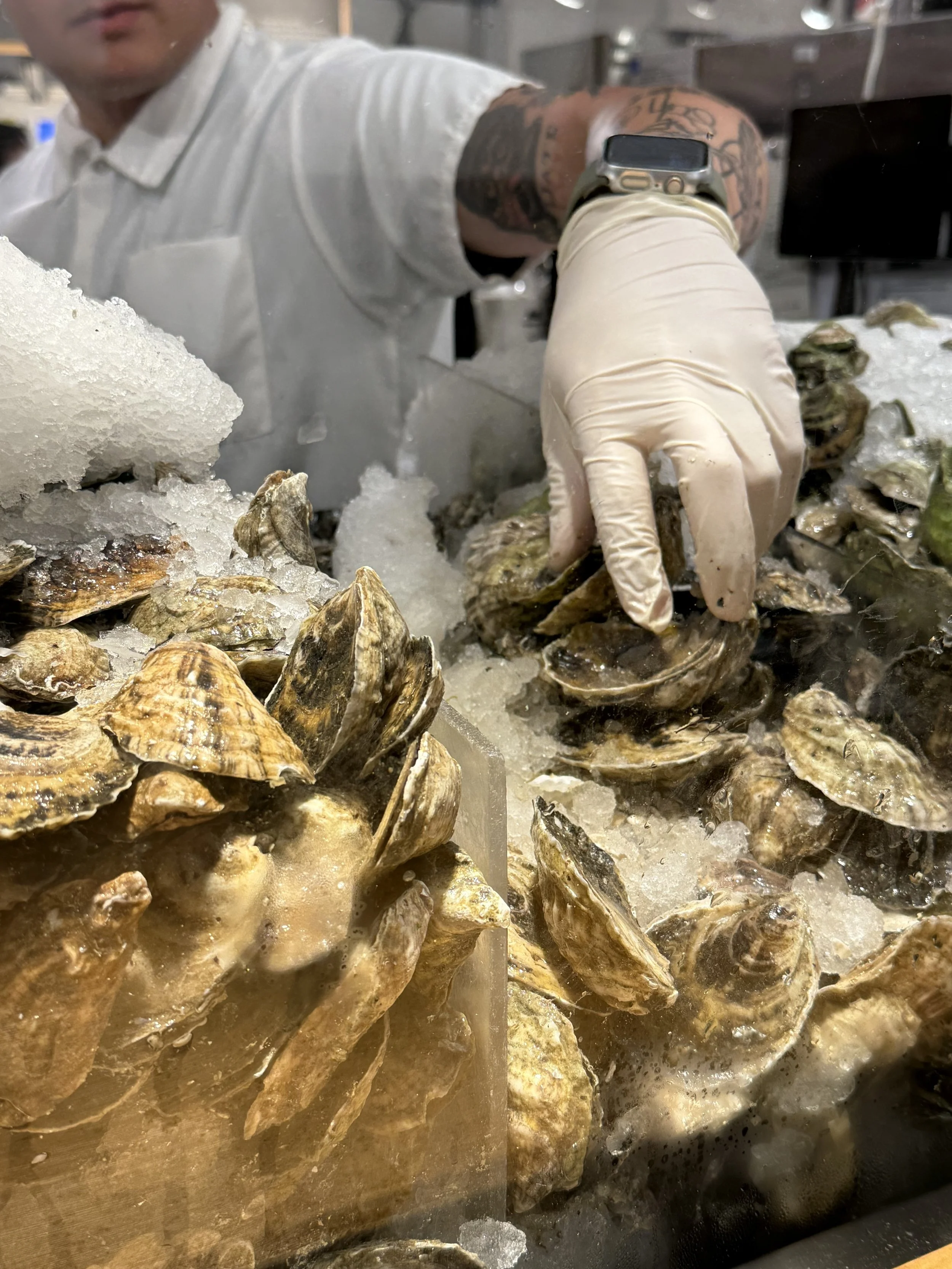
A gloved hand reaches into the pile of oysters, picking one from the ice. The shell glistens under the cold light, wet and silent. Behind the glass, the worker’s tattooed arm moves with practiced precision—neither cruelty nor compassion, only routine. This is the final chapter of the oyster’s life, when nature meets human hunger
The little drama ends quietly
11:11
A man crouches low, cardboard in hand, sweeping the crab back from its short-lived freedom. A second later it’s dangling in the air, his grip firm, his face half-smiling—like someone who’s just reclaimed a lost coin. The crab stretches its claws, not as a victory sign but like punctuation at the end of a joke. Around us people chuckle; the market floor glistens, as if nothing ever happened.
Fish, shrimp, scallops
11:11
Fish, shrimp, scallops—neatly dried, perfectly preserved, glowing orange under the sun. They look peaceful, even proud, lined up in plastic trays as if posing for one last photo. But I remember them differently. I saw them once, alive and moving, in Petco tanks where water kept circling.
Natural
11:11
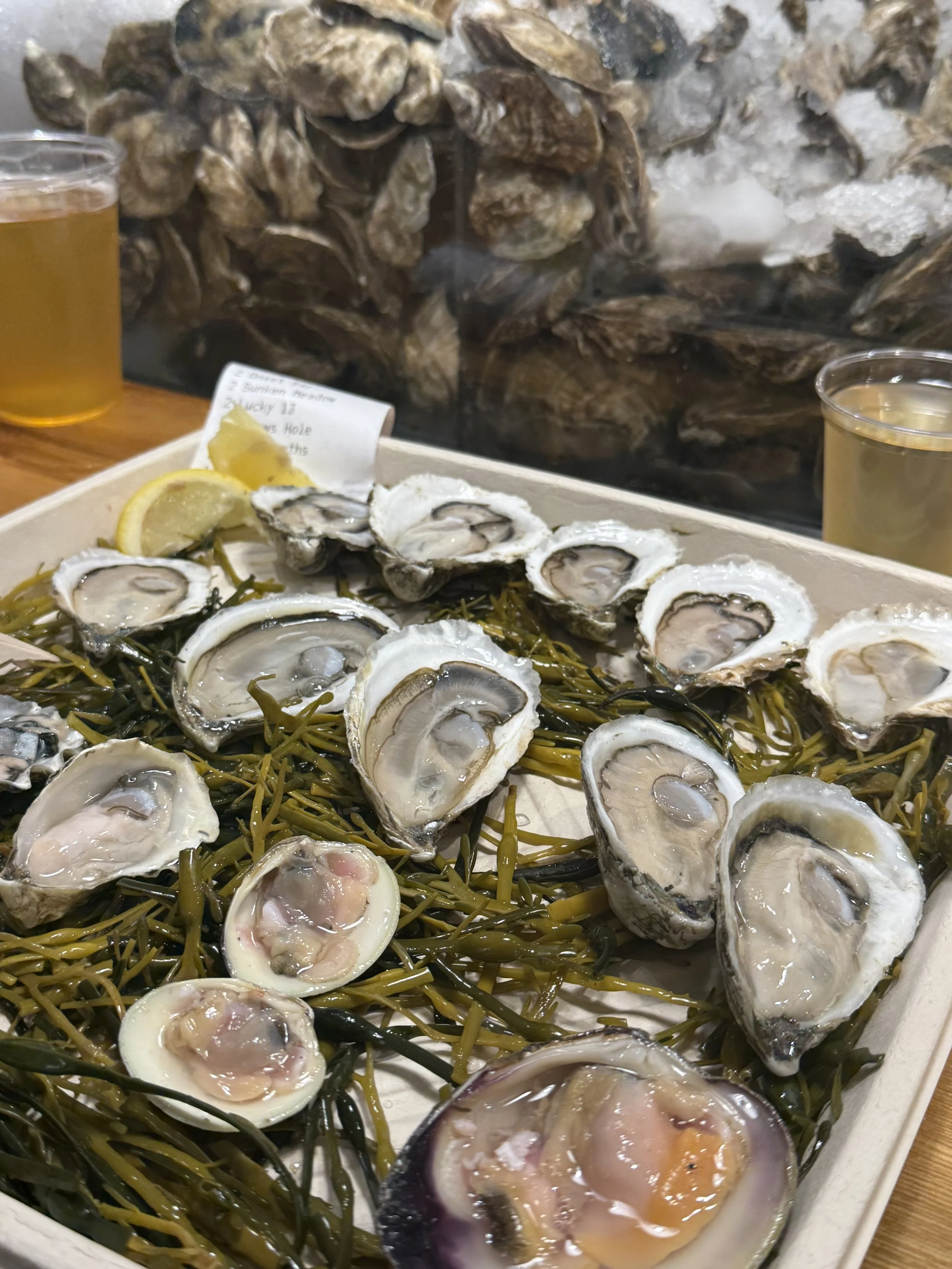
Clams and oysters are also a kind of delicacy. It doesn’t feel ironic anymore—it feels like a gentle continuation. They traveled from the ocean to the table, from life to flavor. Food doesn’t end life; it lets it continue in another form. Everything feels ordinary, almost natural— just like the city itself, always consuming, always renewing
Congee Village Restaurant
11:11
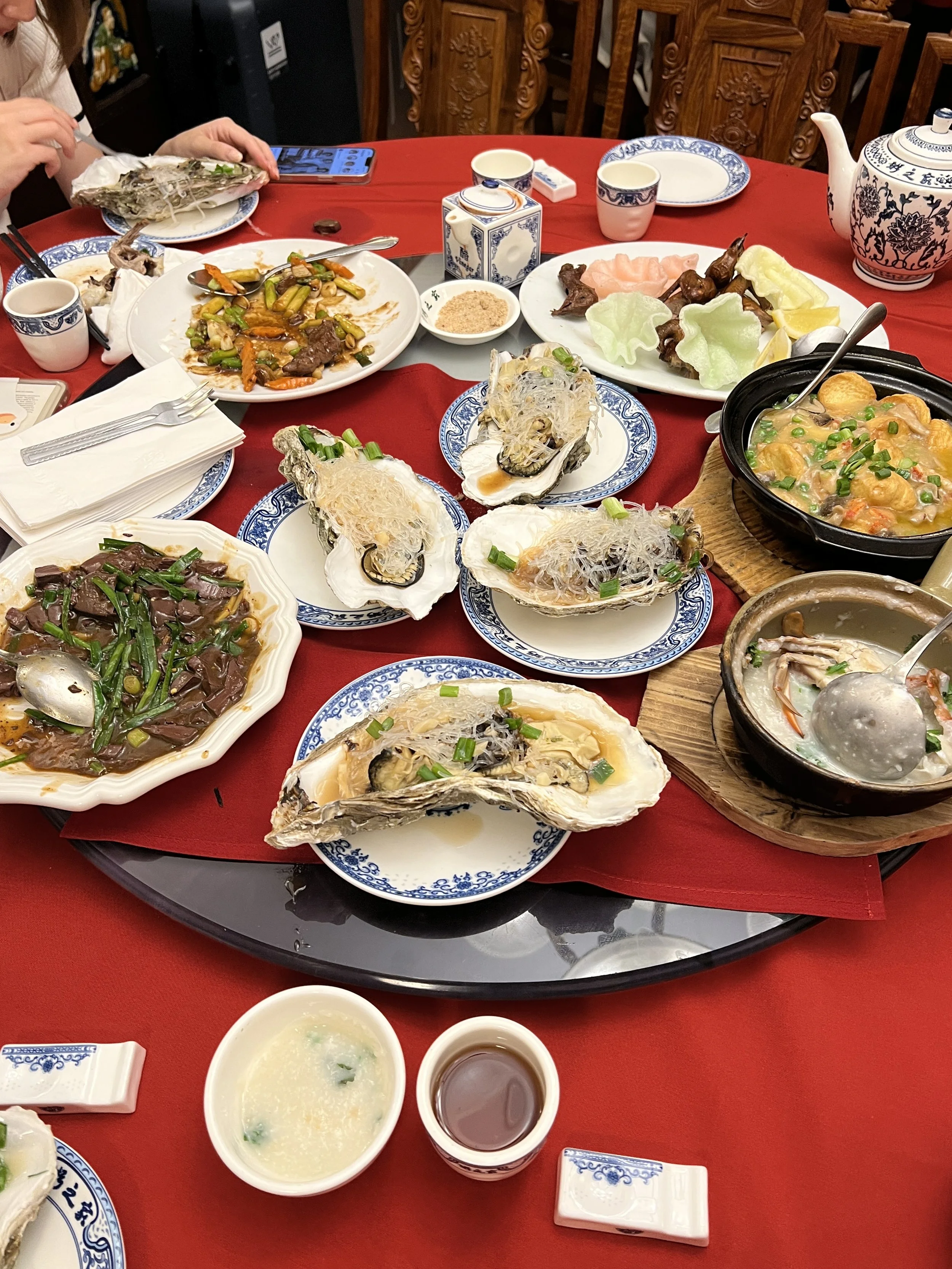
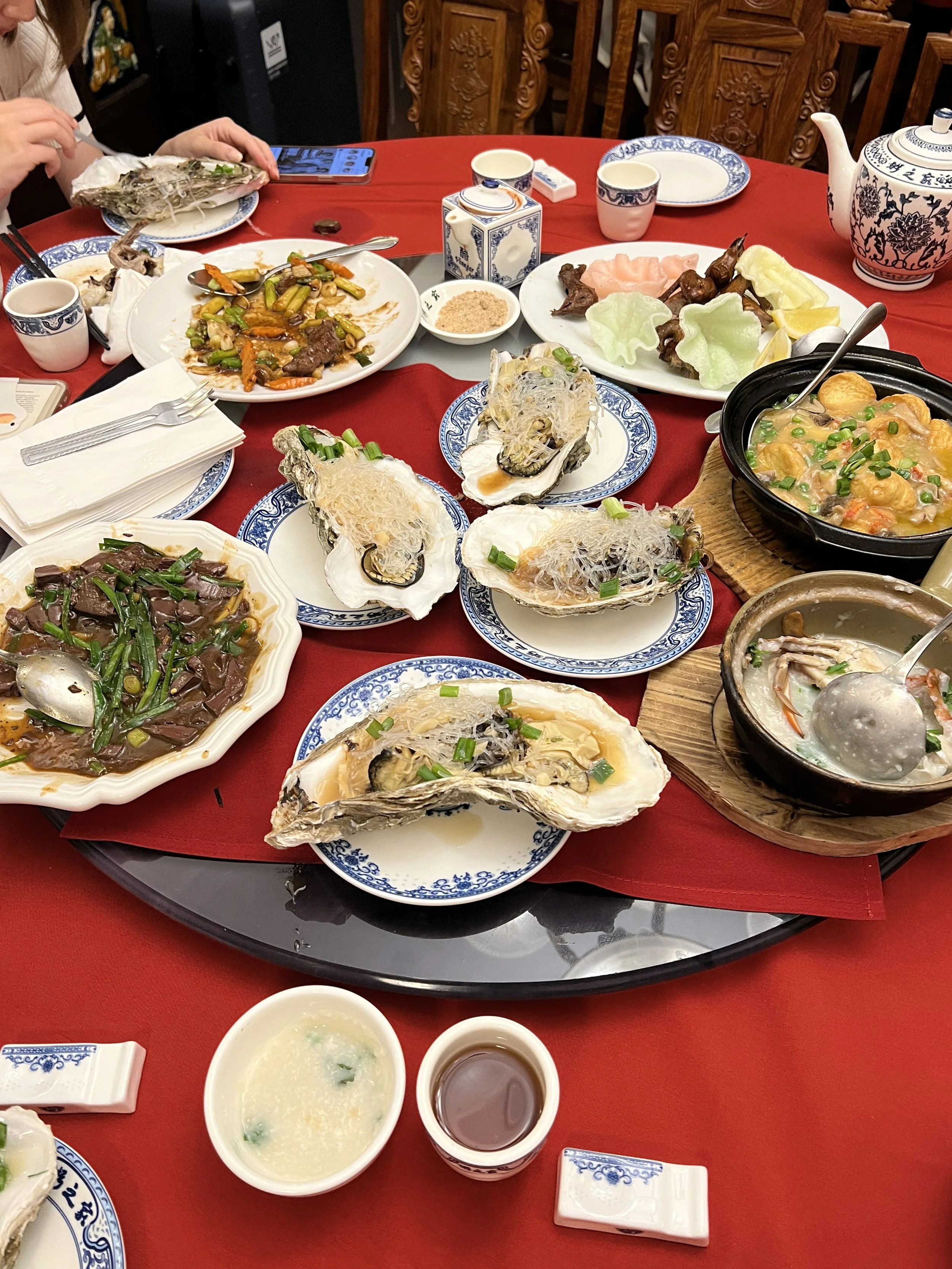
This is Congee Village Restaurant, a traditional Cantonese restaurant in Chinatown.Their oysters are huge—bigger than a hand—served with glass noodles and scallion sauce. The table is covered in red cloth, tea pots, clay pots, and porcelain bowls; everything feelswarm, familiar, and deeply cultural.The food here is not about surprise, but about memory—it tastes like home, like something passed down rather than invented.I watched the steam rise from the bowls, the sound of chopsticks tapping against plates. Every dish seemed to tell the same quiet story: that food is more than survival or pleasure—it’s a language that connects generations, a way to remember who we are.
The Table of All Creatures
As I walked through Chinatown, watching the flow of water, food, and people, I began to notice a quiet rhythm connecting everything. Every oyster, every bowl of soup, every cup of tea — they all began with water. Water wasn’t just the start of food; it was the silent spirit moving through all creation, linking nature, labor, and love in one continuous circle. That realization changed the way I saw my work. It grew beyond photography and became something larger — a vision. I started to see that nourishment, compassion, and faith are all part of the same current, flowing through every act of giving, every moment of care, every shared meal. As a Catholic, I’ve always believed that love is more than emotion —it is an act of giving, adivine current that flows from God through all creation. In Scripture, the Greek word Agápē means divine love — a love that is unconditional, selfless, and eternal. It is the love that “flows like living water” (John 4:14), bringing life wherever it touches.
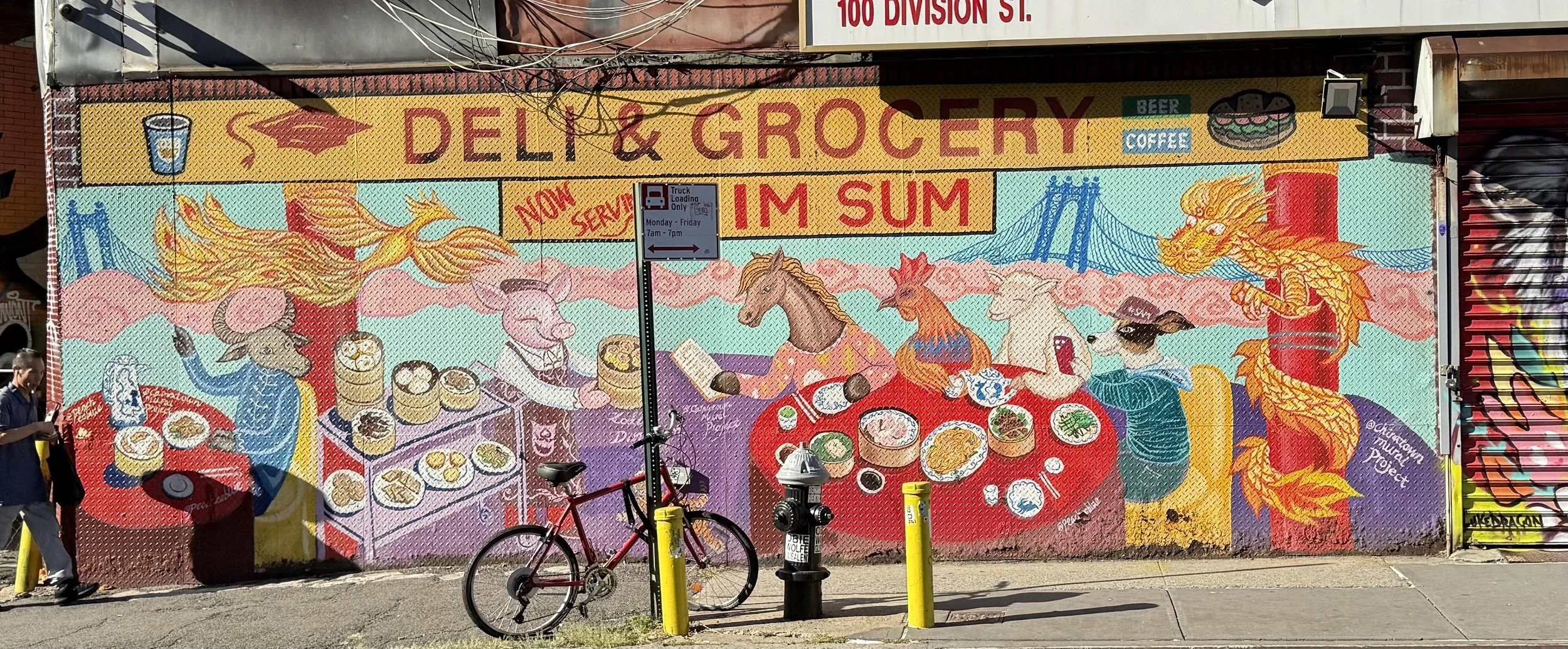
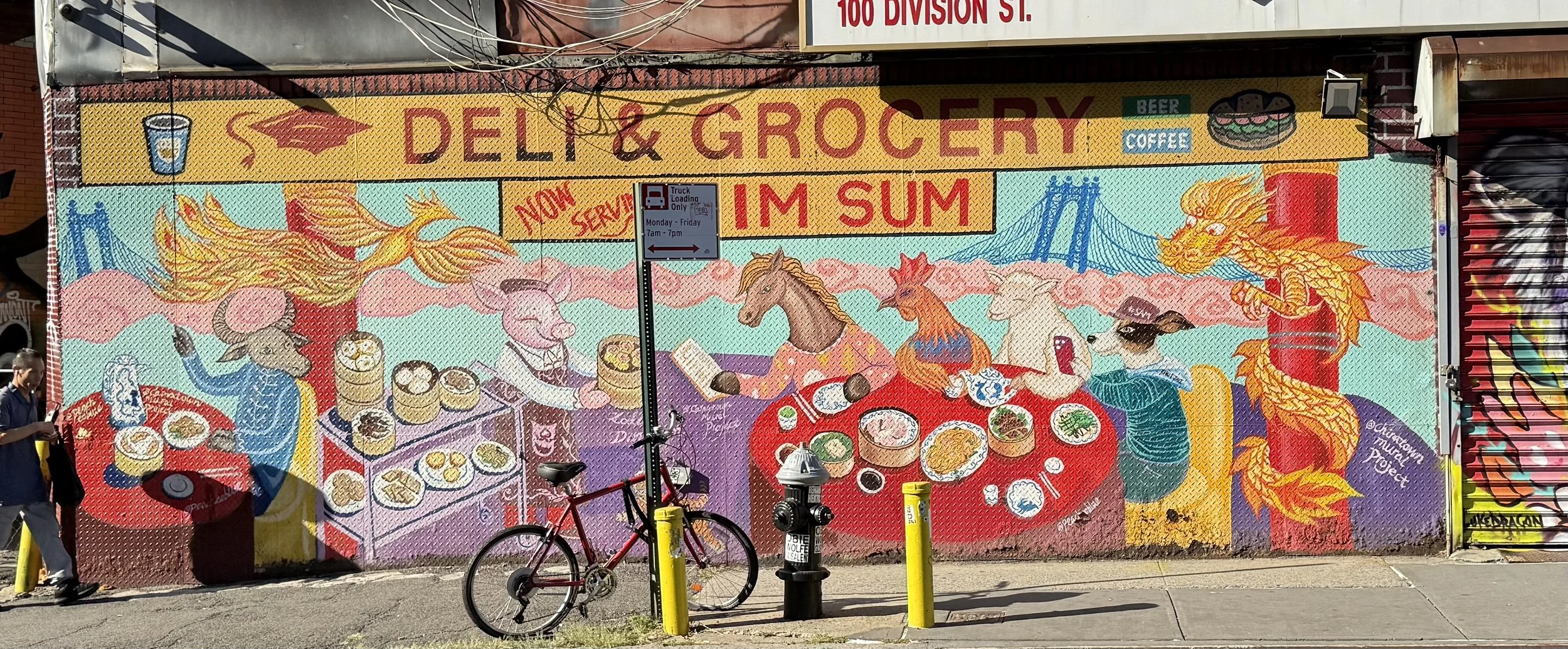
On the wall of a corner shop in Chinatown, animals sit around a table eating dim sum. A pig serves tea, a rooster reads the menu, a dragon winds above them like a guardian of the meal. Each animal is different, yet they all share the same table.I stop to look at it longer than I meant to.It feels funny at first—cartoonish and bright—but then it starts to make sense. Maybe this is Chinatown.Maybe this is New York. A place where differences don’t separate, they sit together, drink tea, and share plates. Here, everyone speaks the same language—the language of food. The mural reminds me of everything I’ve seen: the fish from Petco, the oysters from the market, the dumplings, the tea, the people. All part of one circle, one table, one story.The faces, the flavors, the textures change—but food remains the same. Food is the only thing that truly belongs to everyone.
Lunch Time
11:11
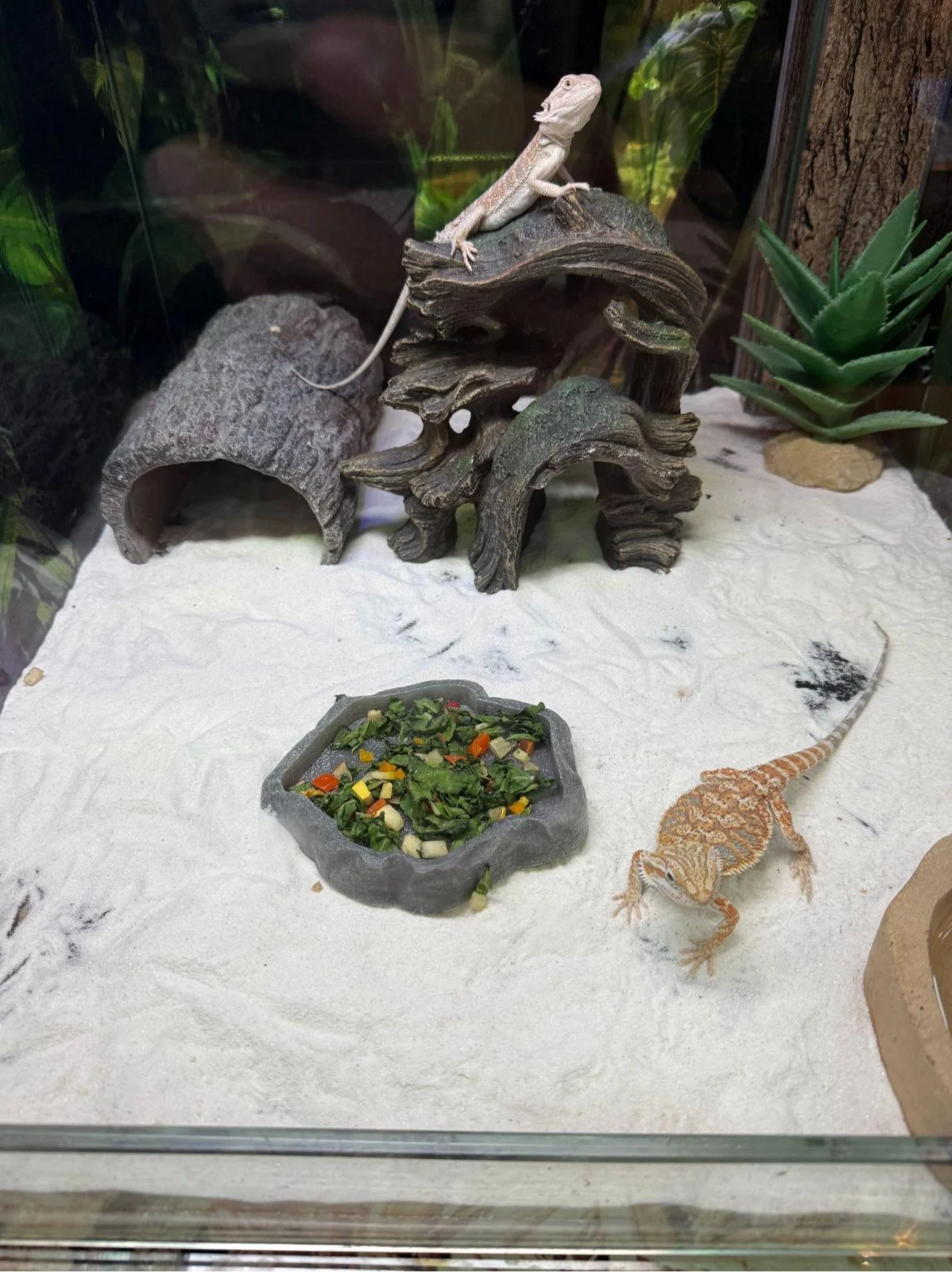
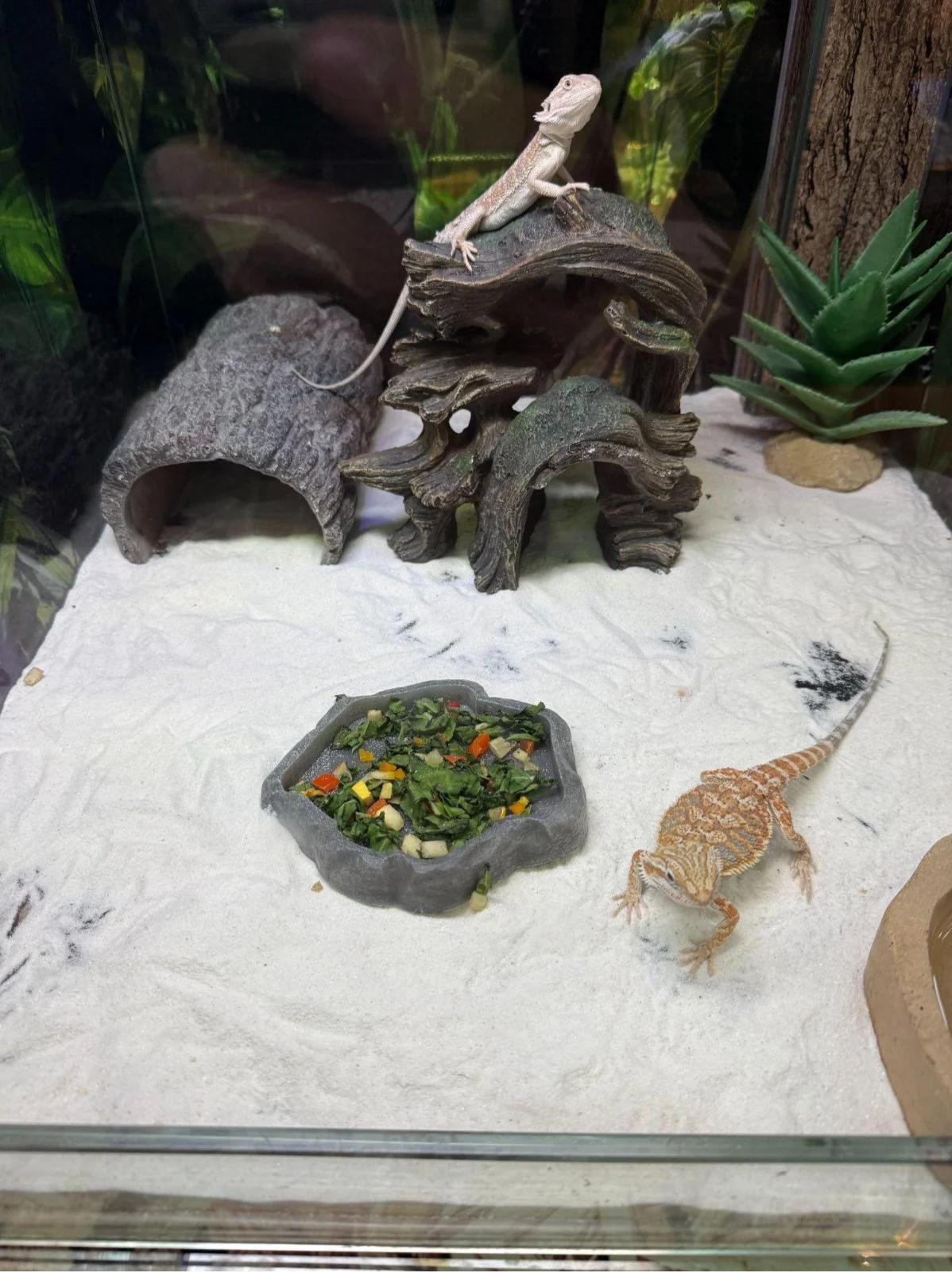
Inside the glass tank at Petco, two bearded dragons pause before their bowl of choppedgreens. The sand is bright white, almost too clean—like a miniature desert built for display.One lizard rests high on a stone ledge, surveying the scene; the other approaches the food, its orange scales glowing under the artificial light. Everything here feels both alive and curated, a world within a world.
The Second Aquarium
11:11
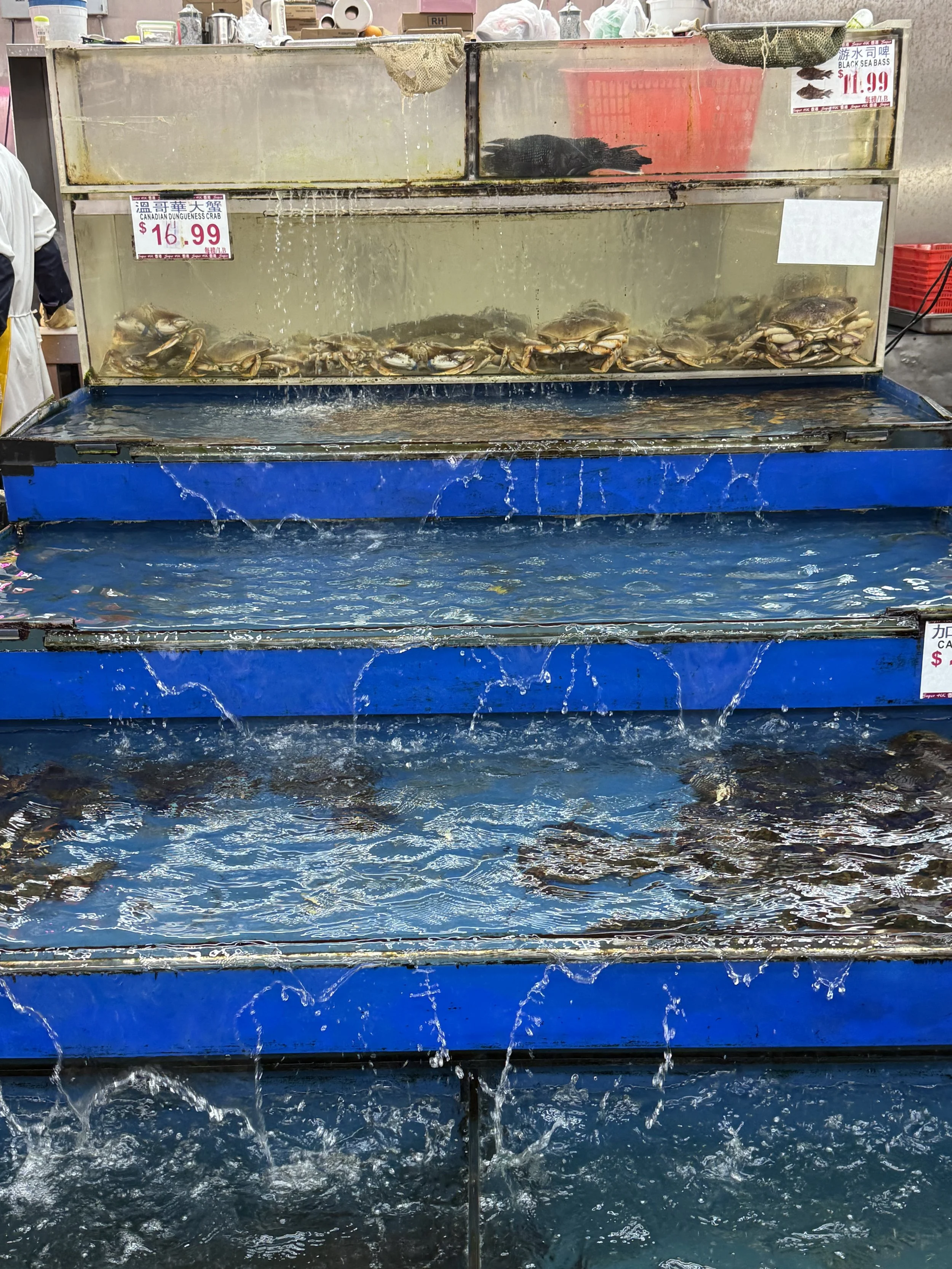
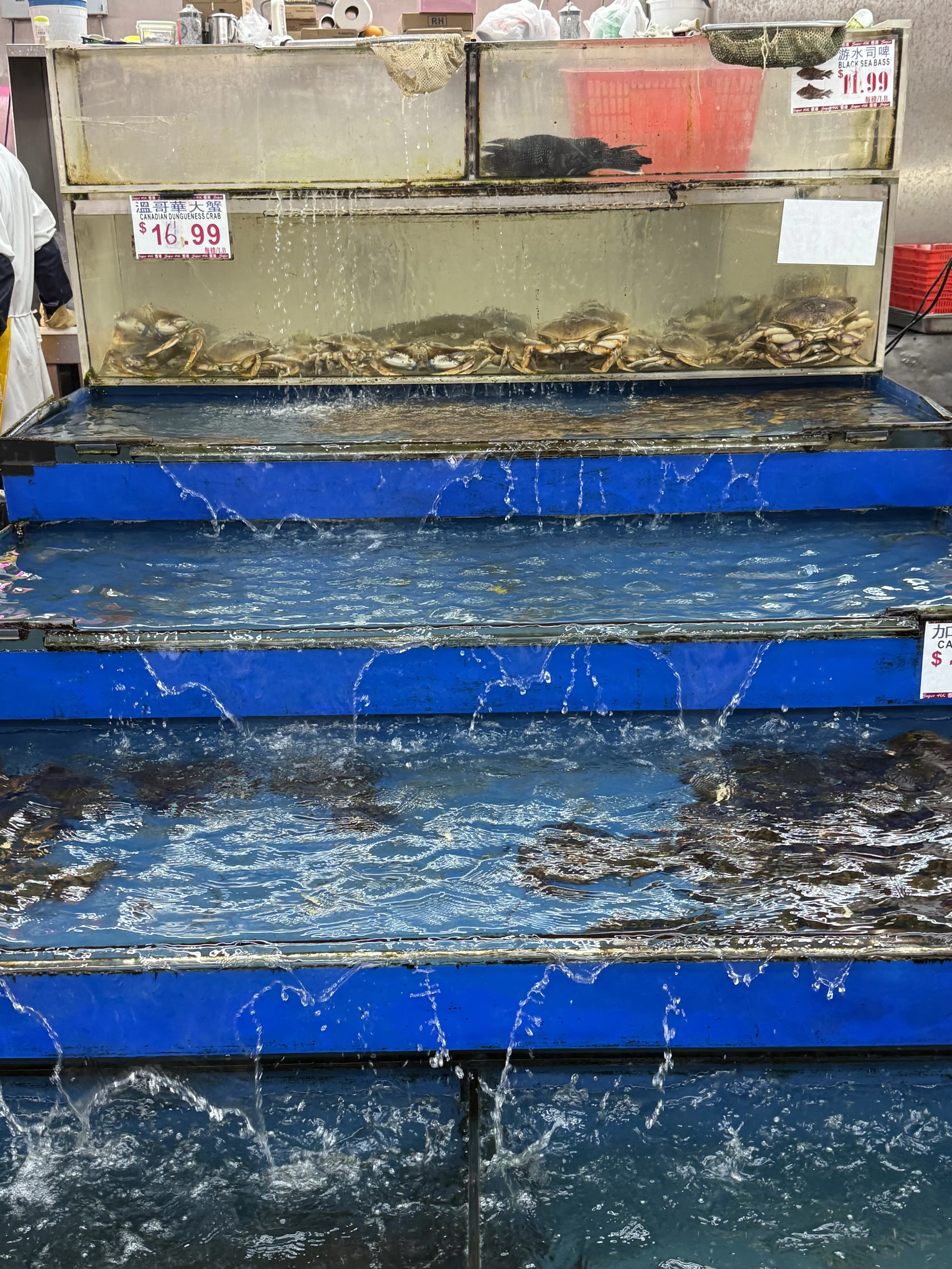
At the Hong Kong Supermarket in Chinatown, the tanks overflow with motion. Water trickles down from one level to the next, forming a staircase of containment. Crabs crawl over each other in the middle tier, fish swim in endless circles below. The price tags hang like quiet verdicts: $16.99 per pound, $11.99 per pound. The rhythm of dripping water echoes the sound of time—constant, indifferent.
The Life of a Pig
11:11
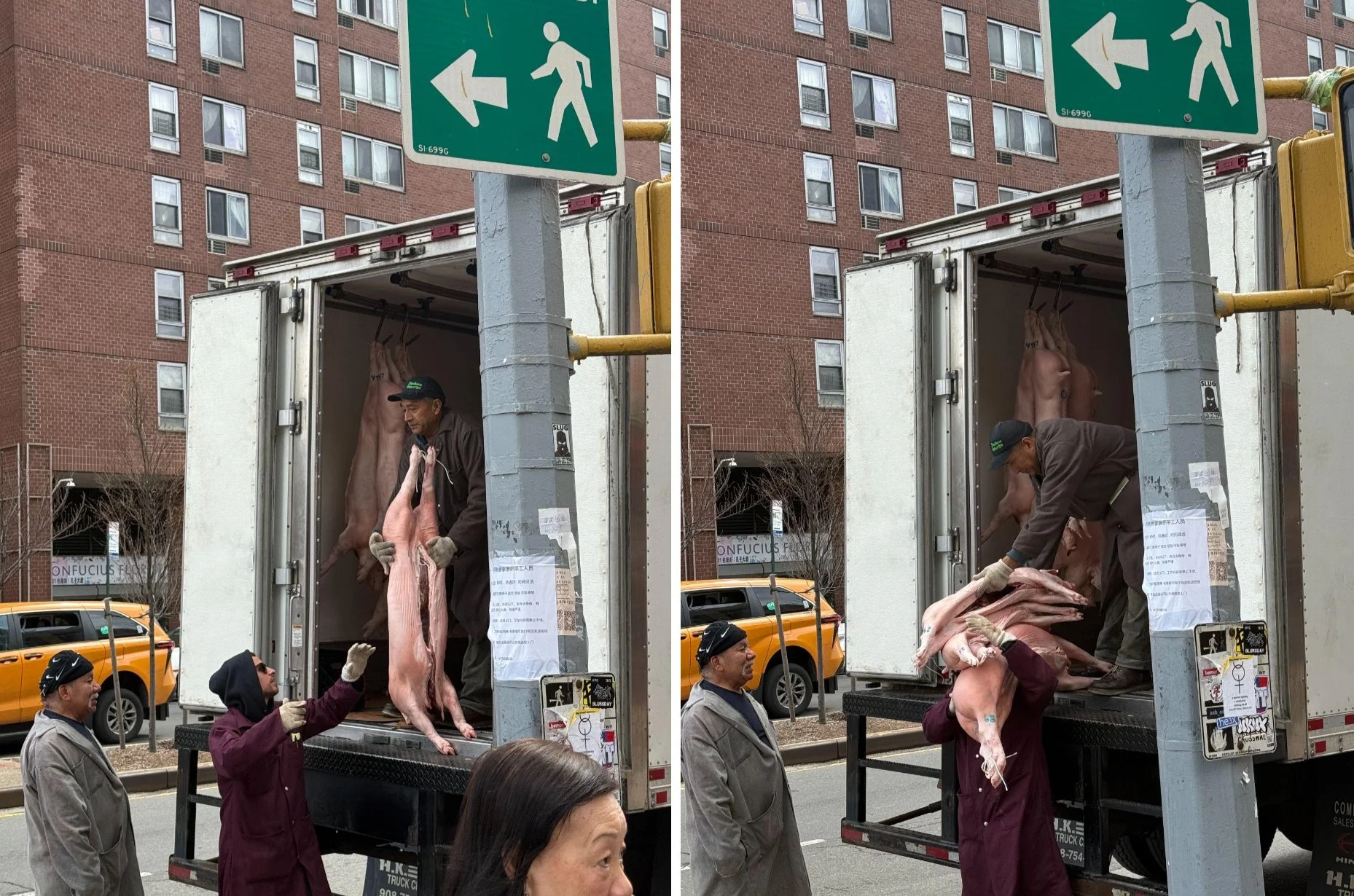
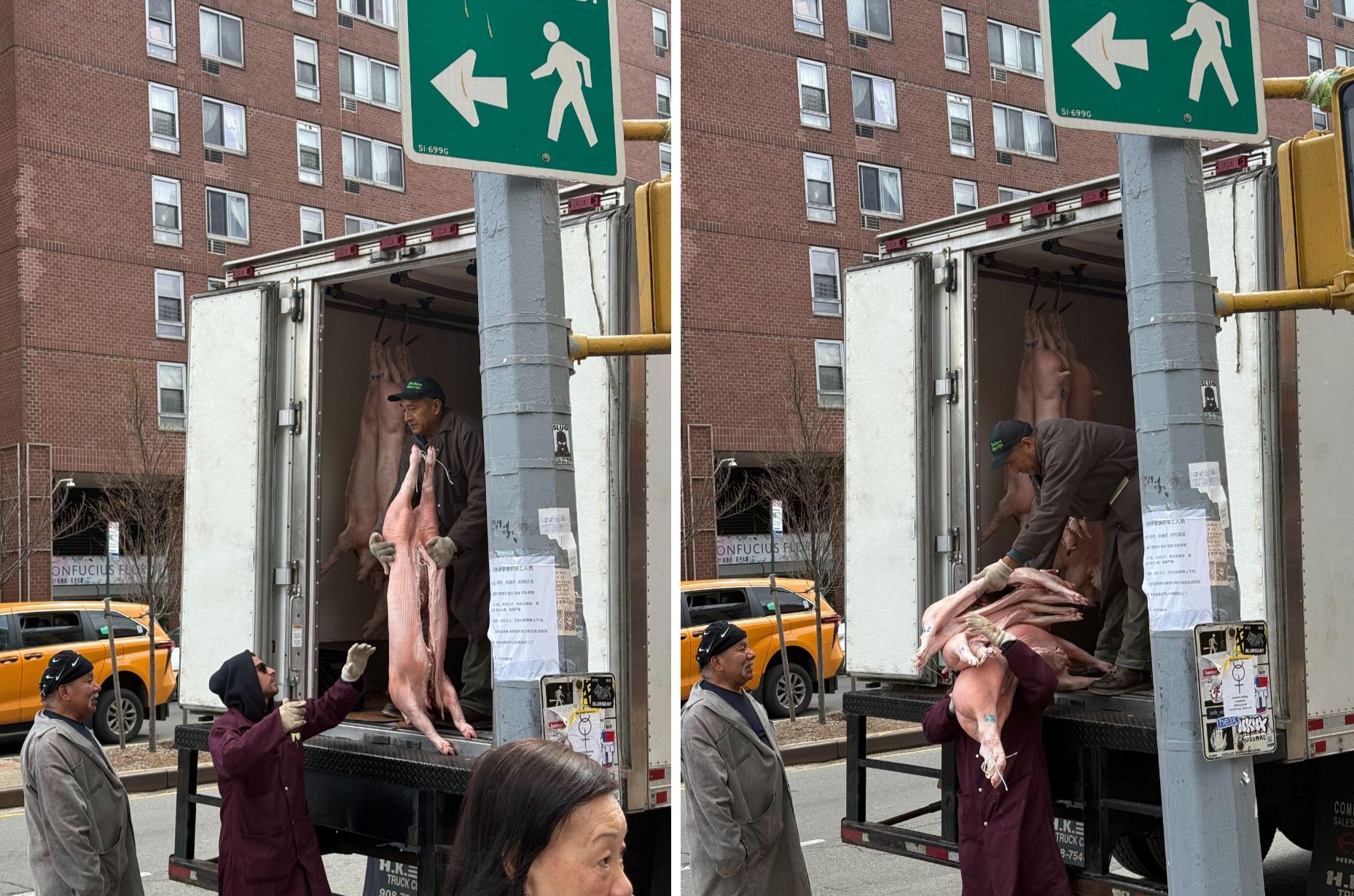
The Pig Has Grown Up. On a street corner in Chinatown, a refrigerated truck door swings open. Inside hang rows of pigs—pale, heavy, silent. Two men lift one down carefully, almost respectfully, as if handlingsomething sacred. A passerby pauses, a taxi glides by, and life continues as usual. The pedestrian sign above points left, like a quiet instruction for the living to keep moving. The pig has finished its journey. The truck drives on. The city keeps eating, keeps moving, keeps forgetting. The pig grew up—of course it did. That’s what everyone wanted, right? To grow, to become something. It just happened to become meat. There’s a strange calm in that logic, a peace so complete it almost feels holy. I take the picture, then step aside to let the truck pass.
At the food market on Elizabeth Street
11:11
At the food market on Elizabeth Street, the day slows down. Under red lights, rows of Chinese dishes glow softly—dumplings, zongzi, stir-fried vegetables, braised meats.
Crab House
11:11
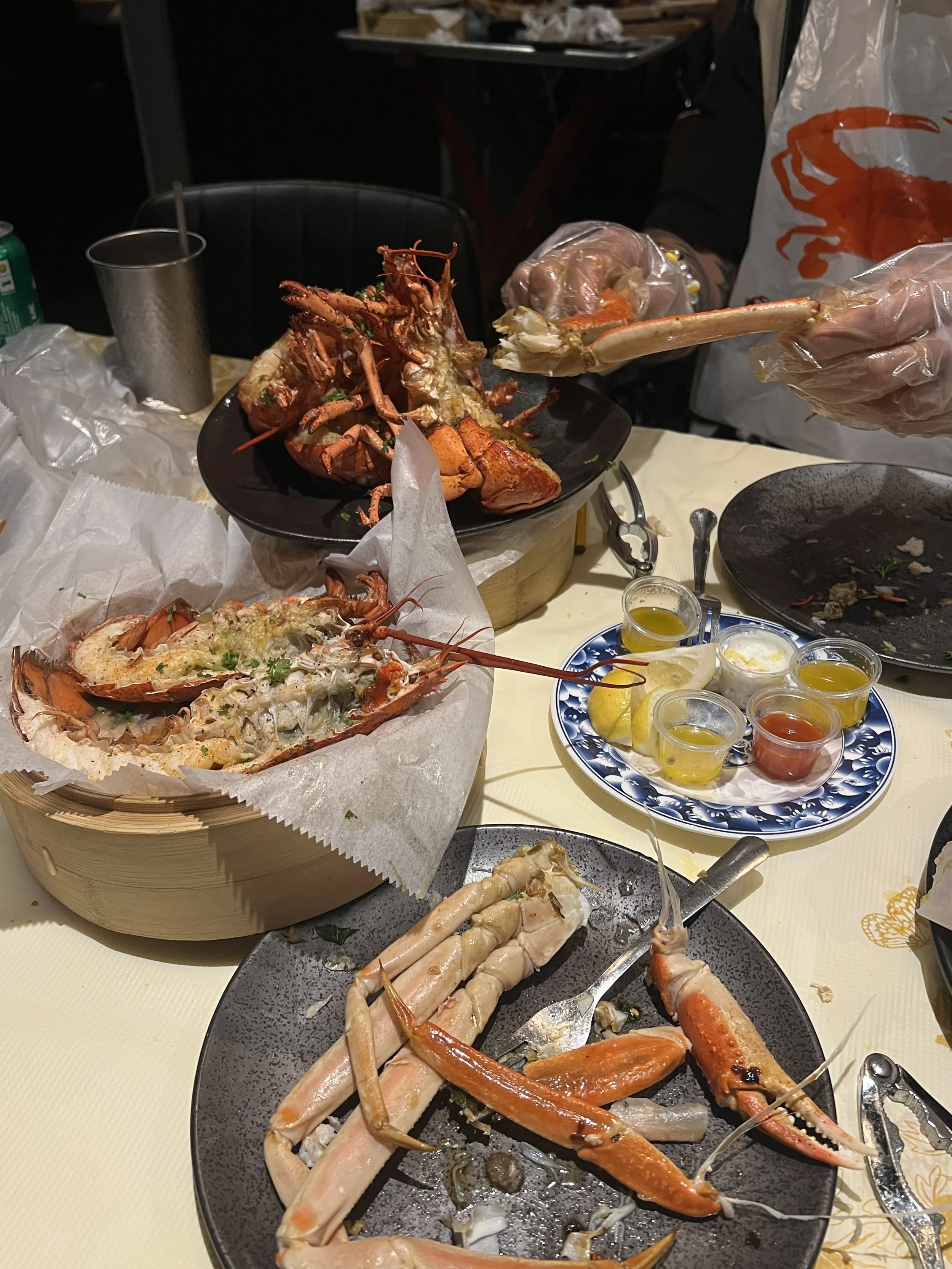
This is Crab House, a famous seafood buffet—known for its “unlimited lobster. ”The tables are crowded, hands busy cracking shells, butter and lemon glistening under the light. Lobster, crab, clams—each plate feels like the last chapter of a long story that began in water. I used to watch these creatures behind glass; now they’re in front of me, transformed, shared, and celebrated. The sound of shells cracking mixes with laughter and conversation. It’s loud, joyful, and strangely peaceful at the same time. After all the stages of display, trade, and preservation, this is the final transformation—from survival to satisfaction, from the sea to the human body.
JingFong Dimsum
11:11
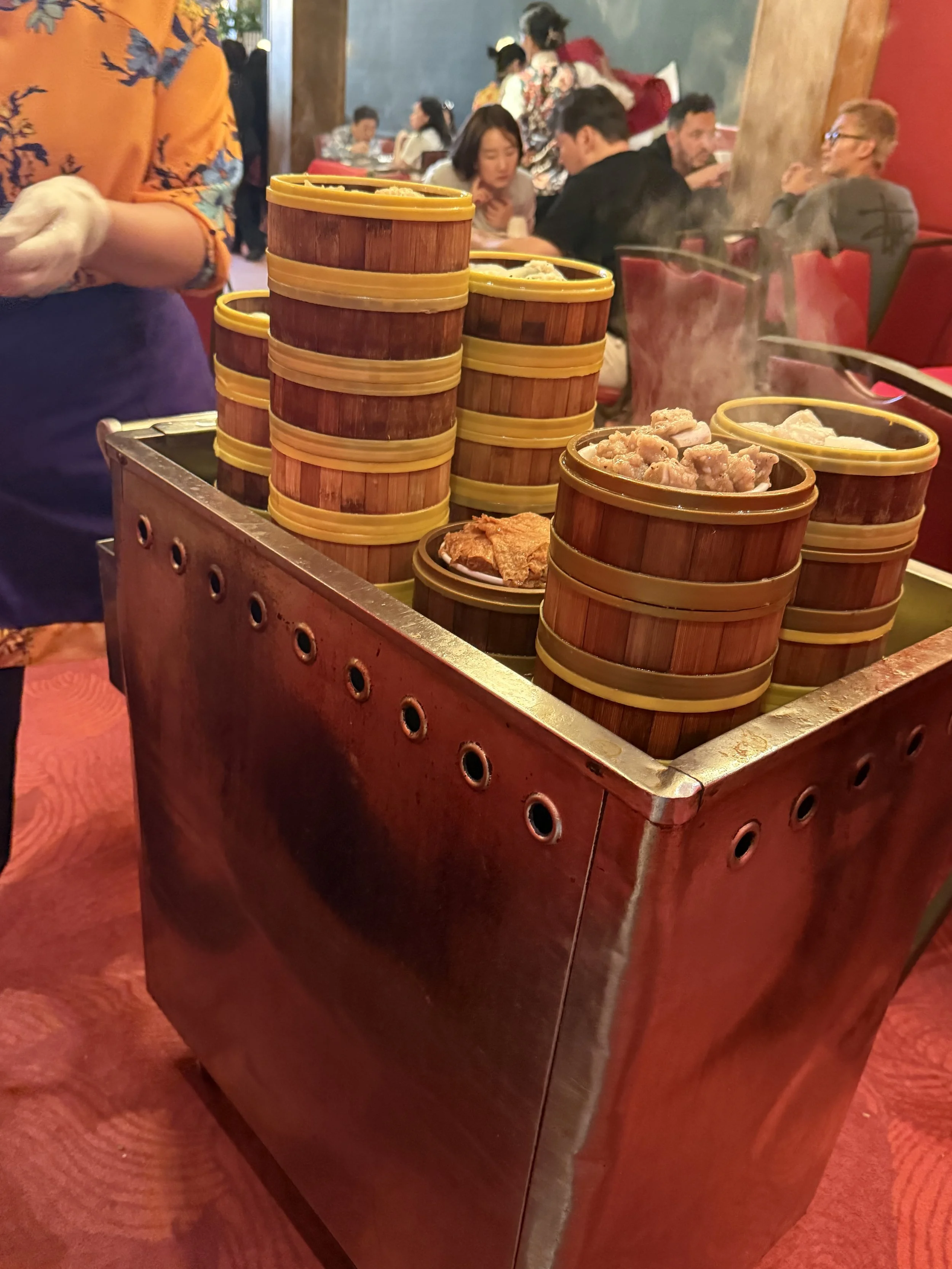
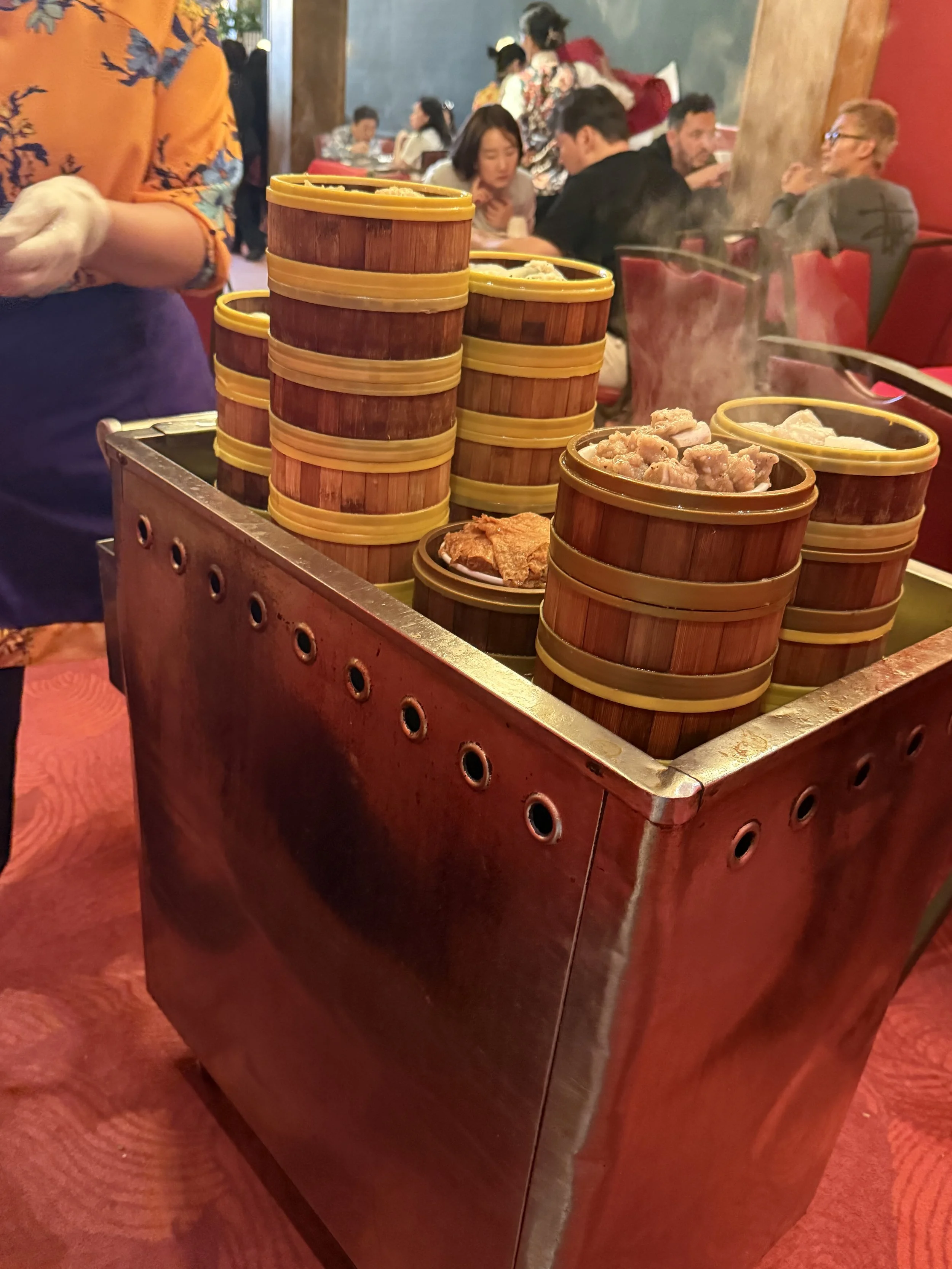
Morning in Chinatown always starts the same way for me—with the sound of bamboo steamers being opened, and carts slowly moving between red tables. At Jing Fong Dim Sum, everything feels familiar, like a rhythm the city has memorized. The waiters call out in Cantonese, teacups clink, and steam curls up into the light.I sit down, watching baskets fill the table—har gow, siu mai, chicken feet, all shining under the steam. Each one looks different, each one tastes different, but somehow, together, they make sense—like the people who gather here.Families talk softly, friends laugh, strangers share tables. No one rushes. The morning stretches, slow and warm.The smell of shrimp dumplings and jasmine tea mixes in the air. It feels like home, even if you’re far away from home. Here, food is not just breakfast—it’s memory, migration, and belonging, all served in small bamboo trays.